
Hydraulic Breaker Specifications: LC Model Chart and How to Read It
Hydraulic breaker specifications for every LICH model: excavator class, chisel diameter, weight, oil flow, pressure, impact rate and energy, with how to read each field.
All buyer guides
Hydraulic breaker specifications tell you three things: which excavator can carry the breaker, what its hydraulic circuit must deliver, and how hard and how fast the tool hits. Below are the published hydraulic breaker specifications for every LICH hydraulic breaker model, followed by how to read each field against your own excavator.
Two size guides build on this chart: the hydraulic breaker for 30 ton excavator and the hydraulic breaker for quarry work.
LICH hydraulic breaker specifications by model
Models are listed by chisel diameter. On LICH breakers the LC number equals the chisel diameter in mm, so the LC-140 uses a 140 mm tool.
| Model | Excavator class | Chisel diameter | Breaker weight | Oil flow | Working pressure | Impact rate | Impact energy |
|---|---|---|---|---|---|---|---|
| LC-35 | 1–1.5 t | 35 mm | — | — | — | — | — |
| LC-40 | 1–1.5 t | 40 mm | 79 kg | 15–30 L/min | 90–120 bar | 600–1,100 bpm | 204 J |
| LC-45 | 1.5–2 t | 45 mm | 105 kg | 20–40 L/min | 90–120 bar | 600–1,100 bpm | 280 J |
| LC-53 | 3–5 t | 53 mm | 166 kg | 20–50 L/min | 90–130 bar | 600–1,100 bpm | 406 J |
| LC-68 | 6 t | 68 mm | 289 kg | 40–60 L/min | 90–130 bar | 500–990 bpm | 1,016 J |
| LC-75 | 7 t | 75 mm | 410 kg | 50–90 L/min | 120–150 bar | 450–980 bpm | 1,835 J |
| LC-100 | 12 t | 100 mm | 841 kg | 80–110 L/min | 150–180 bar | 350–700 bpm | 3,102 J |
| LC-135 | 20–25 t | 135 mm | 1,671 kg | 100–150 L/min | 160–180 bar | 350–500 bpm | 6,190 J |
| LC-140 | 20–25 t | 140 mm | 1,977 kg | 120–180 L/min | 160–220 bar | 350–450 bpm | 6,485 J |
| LC-150 | 25–30 t | 150 mm | 2,448 kg | 130–190 L/min | 170–190 bar | 280–400 bpm | 9,380 J |
| LC-155 | 25–30 t | 155 mm | 2,739 kg | 180–240 L/min | 180–230 bar | 200–300 bpm | 10,930 J |
| LC-165 | 30–36 t | 165 mm | 3,217 kg | 190–260 L/min | 200–240 bar | 150–300 bpm | 13,200 J |
| LC-175 | 36–40 t | 175 mm | 3,757 kg | 200–250 L/min | 210–240 bar | 120–200 bpm | 15,500 J |
| LC-180 | — | 180 mm | — | — | — | — | — |
| LC-195 | 42–55 t | 195 mm | 5,400 kg | 250–320 L/min | 260–300 bar | 100–140 bpm | 25,490 J |
| LC-200 | 45–55 t | 200 mm | 6,388 kg | 260–340 L/min | 260–300 bar | 100–140 bpm | 29,700 J |
| LC-200F | 45–55 t | 200 mm | — | — | — | — | — |
| LC-230 | 60–80 t | 230 mm | 8,909 kg | 330–430 L/min | 260–300 bar | 90–130 bpm | 49,800 J |
Three patterns stand out in these hydraulic breaker specifications. Chisel diameter grows with carrier weight: 35–45 mm tools for 1–2 t mini excavators, 135–140 mm for 20–25 t excavators and 195–230 mm for 42–80 t machines. Oil flow and pressure rise in step, from 15–30 L/min at 90–120 bar on the LC-40 to 260–340 L/min at 260–300 bar on the LC-200. Impact rate falls as the breaker gets heavier, from 600–1,100 blows per minute on the LC-40 to 100–140 on the LC-200, while impact energy climbs from 204 J to 29,700 J.
The fields that matter
Excavator class is the first of the hydraulic breaker specifications to check: the carrier weight range the breaker is built for. Stay inside it: a breaker heavier than the range makes the excavator unstable, and a lighter one wears quickly under the force of the boom.
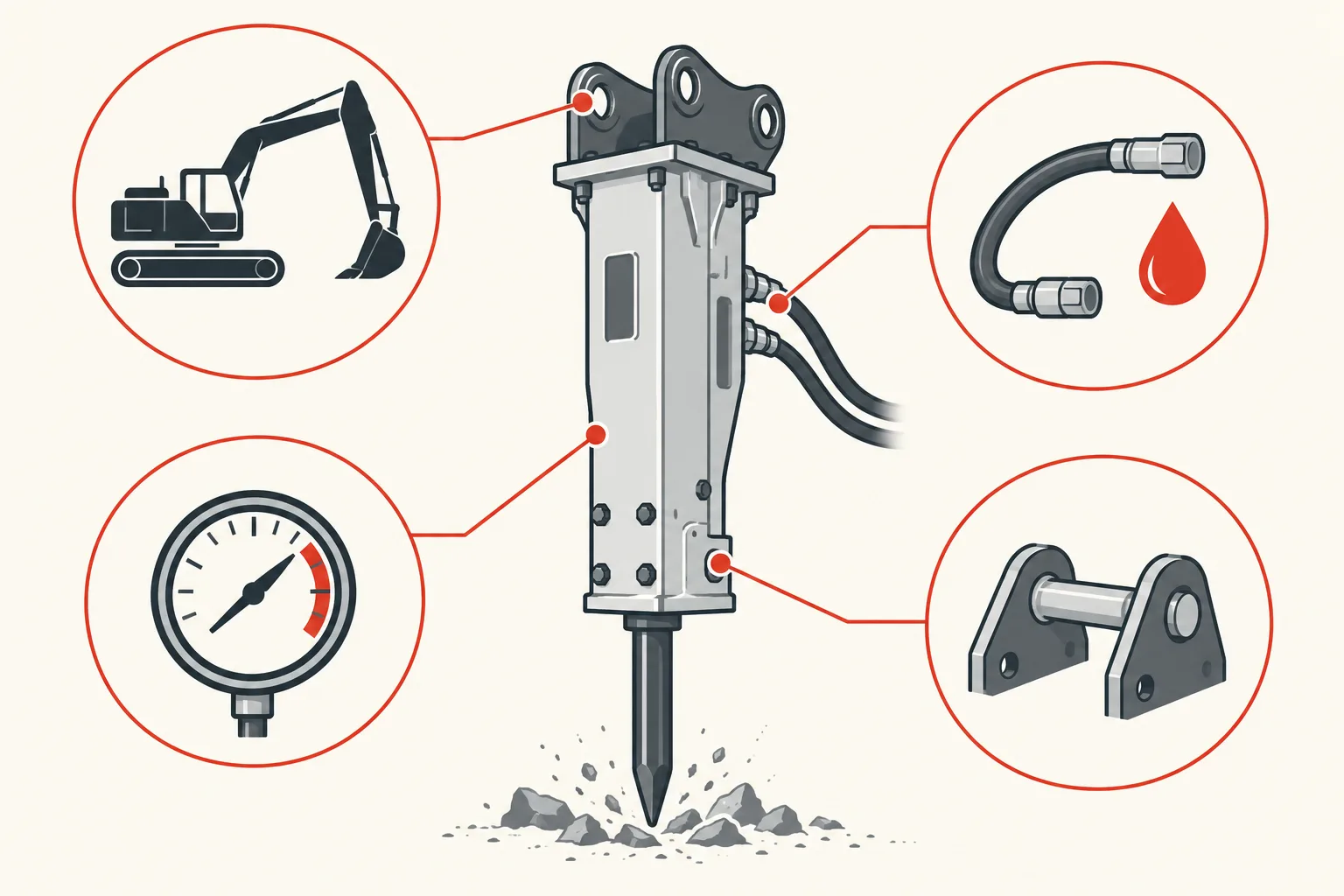
Oil flow and working pressure are the hydraulic breaker specifications your auxiliary circuit has to meet. Read the flow and relief pressure of the excavator’s attachment circuit, then pick the model whose ranges contain both numbers.
Chisel diameter in the hydraulic breaker specifications sets which tools and bushings the breaker takes, and it is the quickest way to order replacement tools. The hydraulic breaker bits page has the full chisel size chart and tool shapes.
Impact rate and impact energy are the performance side of hydraulic breaker specifications, and they trade against each other. Small breakers hit fast and light for concrete, trenching and demolition; large breakers hit slower and harder for primary rock breaking and quarry work.
Breaker weight is the published operating weight of each model, the figure to check against the attachment rating of your excavator.
Comparing hydraulic breaker specifications between suppliers
Put hydraulic breaker specifications from different suppliers side by side and check that each figure describes the same thing: the bare breaker or the breaker with bracket, the tool diameter, and the flow and pressure the figures were measured at. An impact rate with no stated flow is hard to compare.
Sound figures on data sheets are usually sound power, a different measurement from the noise level at the operator’s ear. Our guide on how loud a hydraulic breaker is explains the difference.
Hydraulic breaker specifications checklist
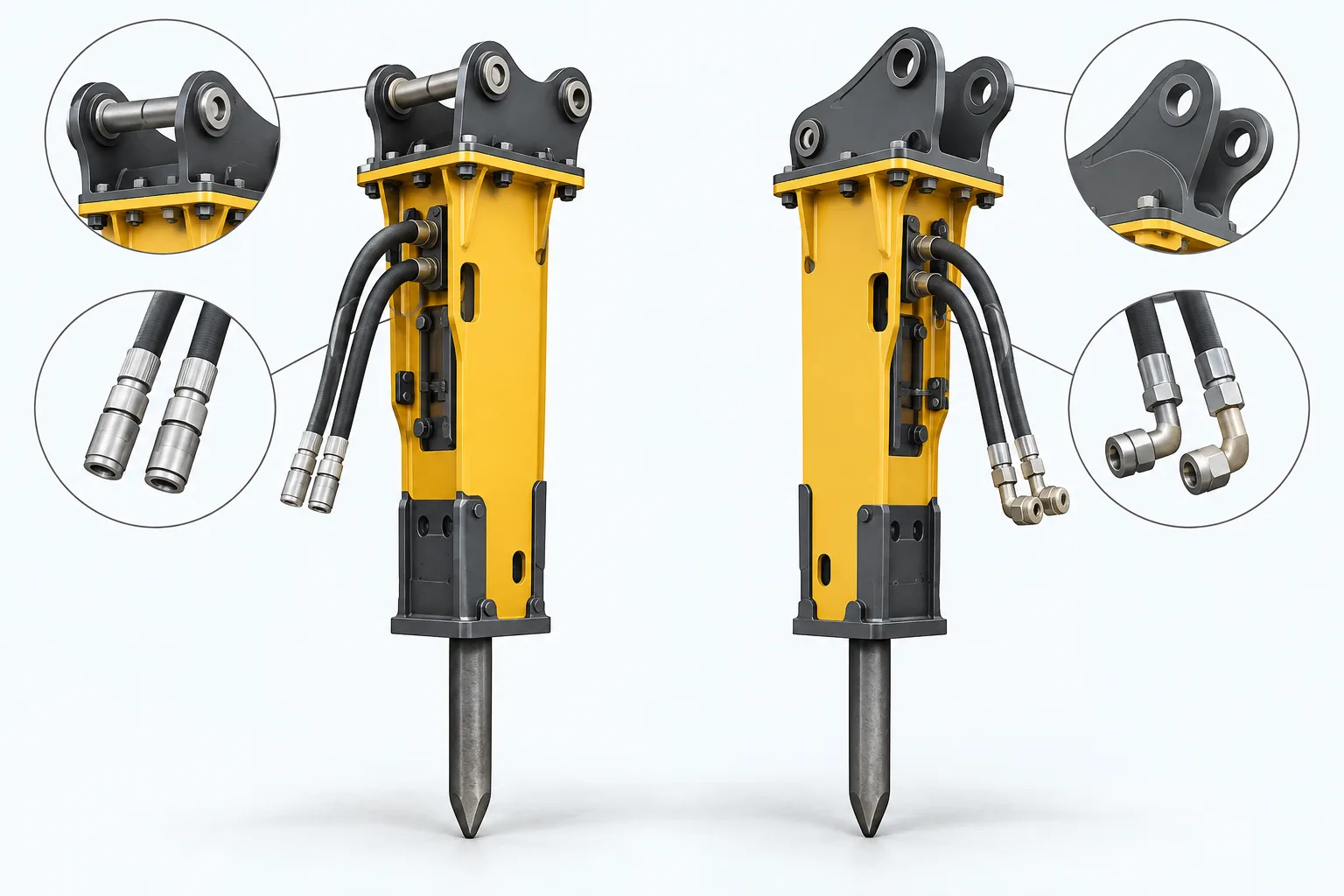
Send these five items and LICH replies with the matching model, bracket, hoses and a written quotation:
- Excavator make, model and operating weight
- Auxiliary circuit flow (L/min) and relief pressure (bar)
- Coupler or bracket dimensions and pin sizes, with photos
- The material you break and the main job
- Destination port and quantity
For the full matching method, read our guide to matching a hydraulic breaker to an excavator, or send your request to LICH.
Related reading: hydraulic breaker impact energy explains how the joule figures scale across the range.
Related reading: hydraulic breaker for 5 ton excavator and hydraulic breaker for demolition guides.
Related reading: the hydraulic breaker weight chart in kg and lb, the hydraulic breaker impact rate chart in BPM, and a glossary of hydraulic breaker terms for every column in the table.
Keep Comparing
Compare more breaker models and buyer guides related to this topic.


