
20 Ton Hydraulic Rock Breaker: Matching Guide
Prepare carrier, hydraulic, mounting and jobsite information for a checked twenty-ton excavator breaker inquiry.
All buyer guides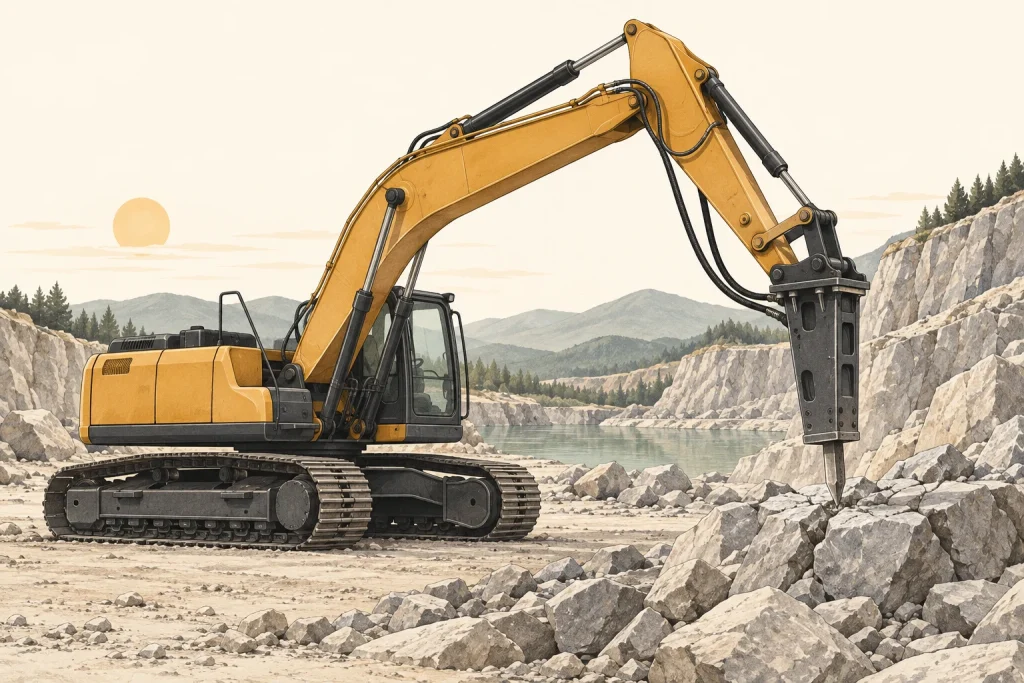
A 20 ton hydraulic rock breaker search usually describes the excavator class, not the attachment weight. Start with the actual carrier model and hydraulic package rather than treating the phrase as a complete specification.
Choosing a 20 ton hydraulic rock breaker requires a checked match between machine, attachment and job. Nominal excavator weight can narrow the shortlist, but it cannot confirm a safe installation on its own.
Define your 20 ton hydraulic rock breaker requirement
For a 20 ton hydraulic rock breaker inquiry, identify the full excavator model, operating configuration and regional hydraulic specification. Machines sharing a familiar model family can have different attachment arrangements.
Describe whether the 20 ton hydraulic rock breaker will handle occasional boulders, trench rock or sustained quarry work. Include photographs, approximate material dimensions and the available working space.
Check the hydraulic and mechanical match
Before approving a 20 ton hydraulic rock breaker, compare the available auxiliary flow with the proposed attachment range. Supply the relevant manual page or a qualified measurement record instead of an estimated setting.
A 20 ton hydraulic rock breaker review also needs pressure and return-circuit information. Ask the technical team to confirm the complete circuit requirements; do not copy adjustment values from a similar installation.
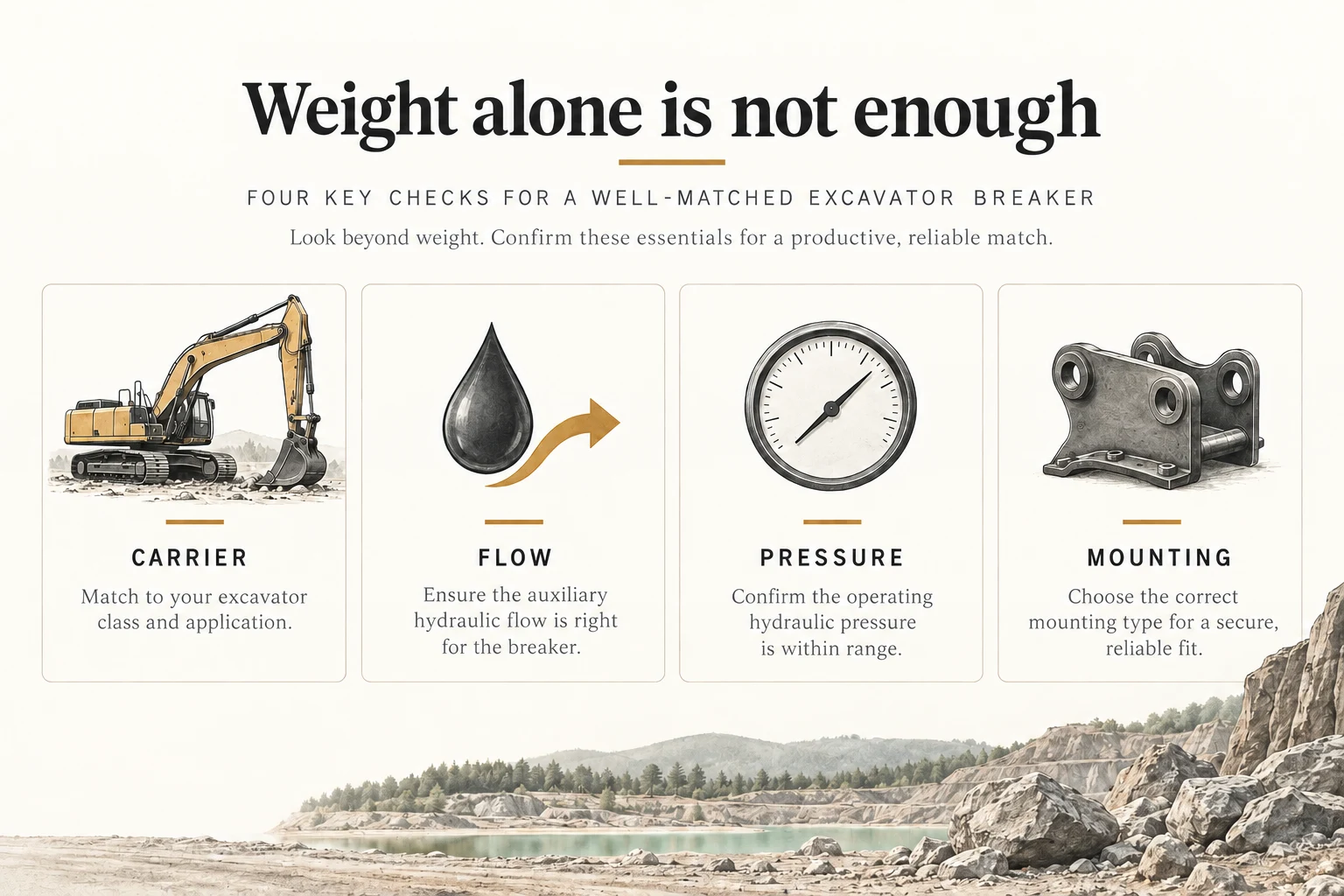
Check 20 ton hydraulic rock breaker mounting separately. Pin dimensions, bracket geometry, coupler details, attachment weight and clearance must be confirmed for the actual assembly.
Do not approve a 20 ton hydraulic rock breaker from tool diameter alone. A matching diameter does not establish identical oil demand, weight, mounting arrangement or approved carrier range.
Turn the shortlist into a documented decision
For each 20 ton hydraulic rock breaker candidate, request the current specification and the exact supply configuration. Keep confirmed values separate from information still awaiting verification.
Compare attachment quotations with the same scope: body, mounting, hoses, tool, included spares, packing and destination. An incomplete quotation can look cheaper while excluding essential items.
If a required specification is missing, ask the machine dealer or qualified technician for help obtaining it in writing. Keeping that gap explicit is preferable to selecting an attachment around an assumed oil flow or an unverified mounting measurement.
A 20 ton hydraulic rock breaker output claim needs job-specific evidence. Rock condition, fracture pattern, operating method and site organization prevent a universal production promise.
Prepare the inquiry package
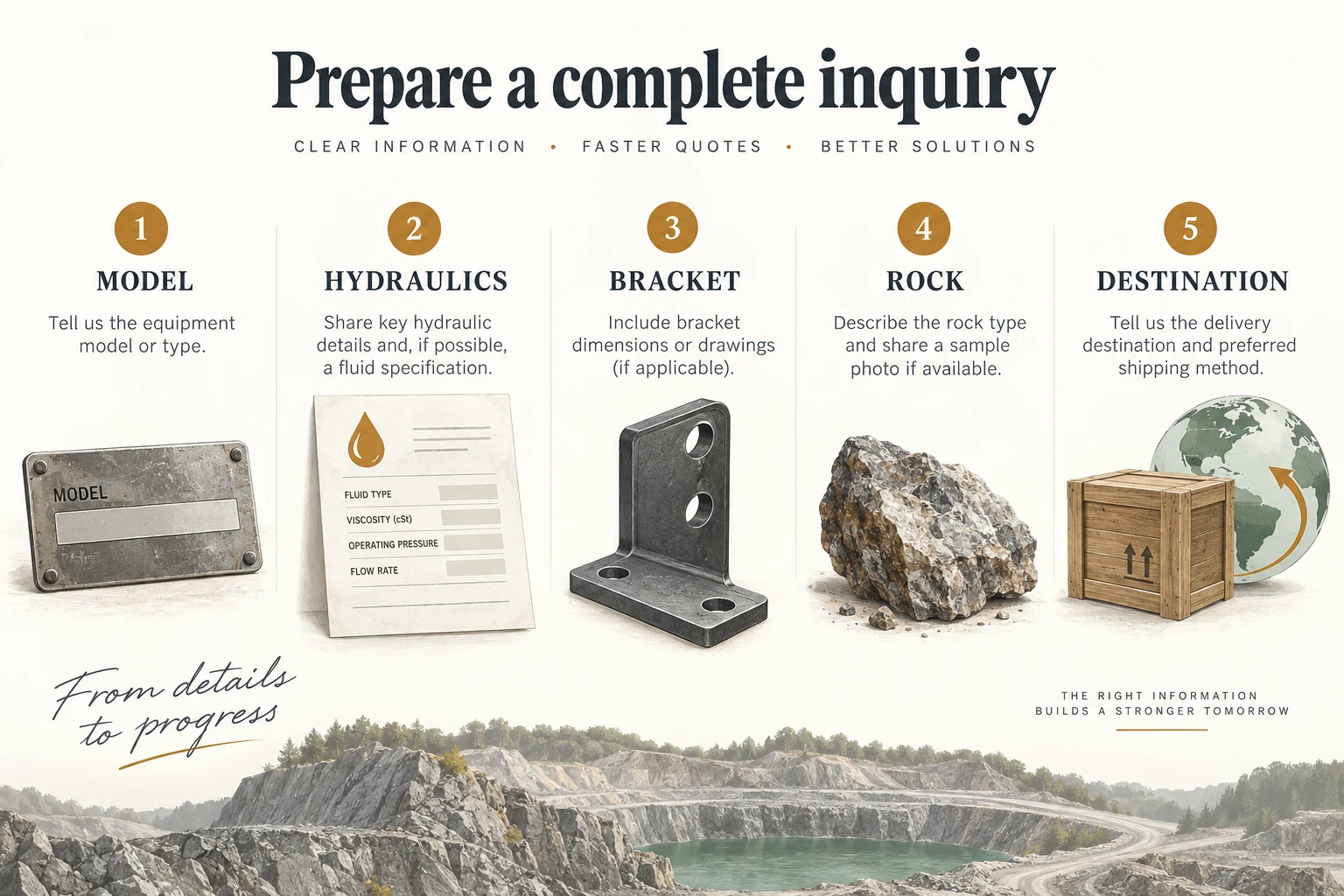
Send your 20 ton hydraulic rock breaker supplier the excavator nameplate, hydraulic information, bracket or coupler photographs, worksite description, quantity and destination. Explain which data you cannot yet obtain.
Ask for a written 20 ton hydraulic rock breaker matching response listing the proposed model and unresolved checks. Treat a carrier-weight range as a screening aid, not final installation approval.
Common selection questions
Will one attachment fit every twenty-ton excavator? No. A 20 ton hydraulic rock breaker must be checked against the actual carrier and mounting configuration.
Should I buy the largest possible model? The 20 ton hydraulic rock breaker decision should follow approved compatibility and the required task, not size alone.
Does an existing customer example prove my fit? A 20 ton hydraulic rock breaker example may help explain an application, but your machine, duty and technical documents still require their own review.
Review the broader rock application guide, browse available models and submit your 20 ton hydraulic rock breaker requirements through the inquiry form.
Reference: LICHI carrier matching checklist. No specific model compatibility or production rate is promised here.
Keep Comparing
Compare more breaker models and buyer guides related to this topic.


