
Hydraulic Breaker Piston Guide: Inspection and Ordering
Understand hydraulic breaker piston function, preserve inspection evidence, review related parts and request a model-matched replacement.
All buyer guides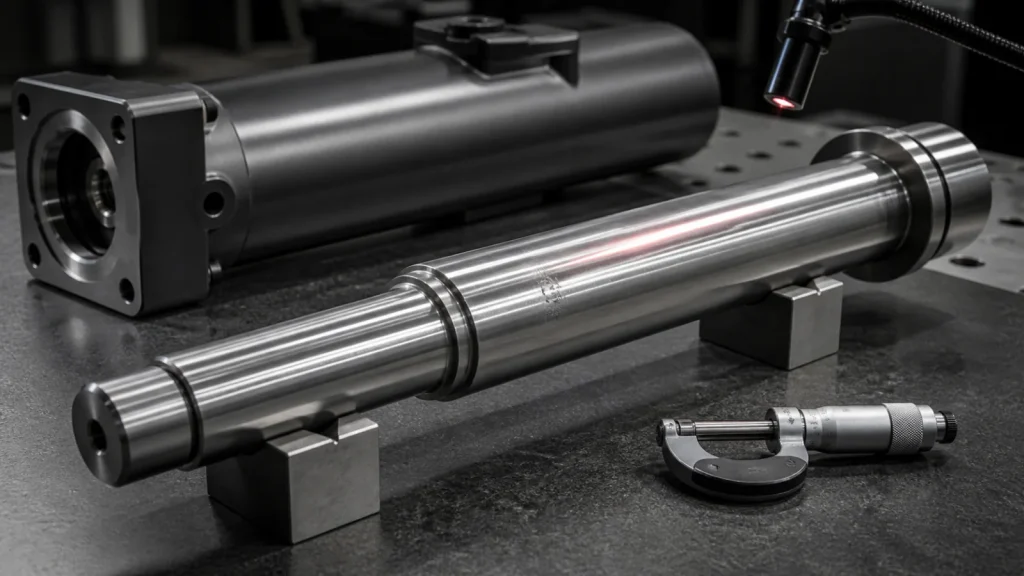
A hydraulic breaker piston converts hydraulic and gas-assisted energy into repeated impact on the working tool. Because it moves inside a closely matched cylinder and transfers each blow through the tool, its condition cannot be judged from breaker size, paint color or excavator class. A correct piston inquiry starts with the exact breaker identity and a documented workshop inspection.
This guide explains what the piston does, which operating records and inspection evidence help a technician, and what a buyer should send when requesting a replacement. It does not provide piston removal, polishing, clearance, pressure or assembly instructions. Those values and procedures belong to the service manual for the exact model and revision.
Safety boundary: A breaker can retain hydraulic and gas pressure after the carrier is stopped. Internal components are heavy and may move unexpectedly if the breaker is opened incorrectly. Isolate the carrier, follow the manufacturer procedure and use trained service personnel for depressurization, disassembly, measurement, lifting, assembly and testing.
What the Hydraulic Breaker Piston Does
The piston is the central moving member in the percussion unit. During a working cycle, controlled hydraulic flow moves it through the cylinder; the piston then strikes the top of the tool. The valve, cylinder passages, seals, back-head or accumulator arrangement and carrier hydraulic supply all influence that cycle. The piston is therefore one component in a system, not an isolated source of impact power.
A symptom such as weak impact does not prove piston failure. Incorrect carrier settings, insufficient flow, excessive return restriction, gas-charge problems, a control-valve fault, internal leakage, tool/bushing problems or the working method can produce similar complaints. Begin with the broader hydraulic breaker troubleshooting guide, then move to internal inspection only when the evidence supports it.
- 1
Record the complaintWhen it occurs, temperature, carrier mode and material
- 2
Check external causesTool, bushings, hoses, connections, oil and approved carrier settings
- 3
Identify the breakerBrand, full model, serial/revision and power-cell evidence
- 4
Inspect professionallyKeep measurements, photos and removed parts tied to their locations
- 5
Match the replacementDrawing item, dimensions, interfaces and related parts are reviewed together
Why Piston Identification Is Model-Specific
Pistons that appear similar can differ in overall length, working diameters, shoulder positions, oil-groove geometry, impact-end geometry and surface treatment. Production revisions may also change a cylinder and piston as a matched combination. A seller’s photograph or a single outside diameter cannot establish interchangeability.
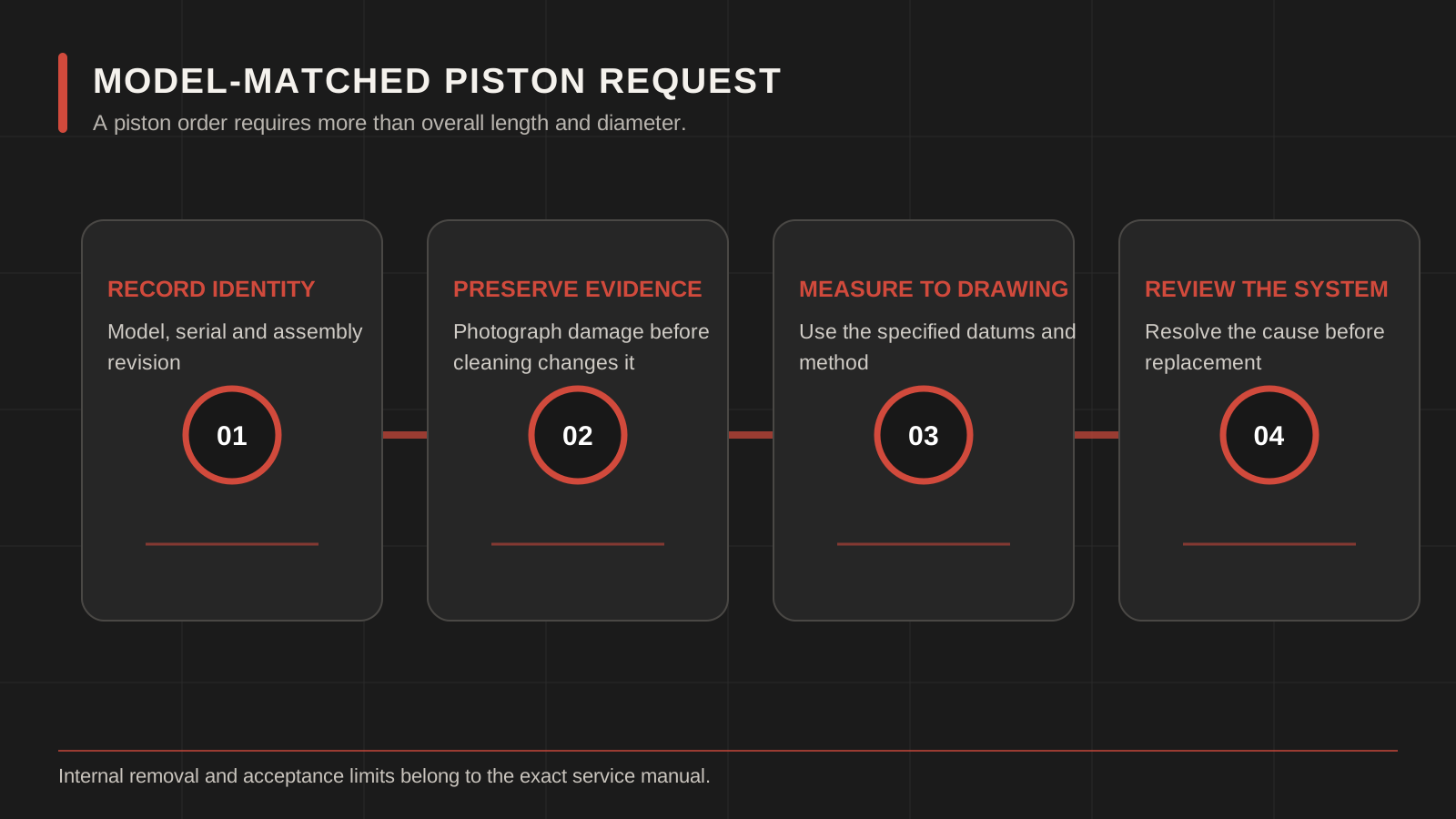
Use the breaker nameplate first. If it is missing, provide complete breaker photographs, housing style, tool diameter, hose-port arrangement, visible casting or stamping marks and the previous supply history. After authorized disassembly, add the original piston dimensions and the related parts drawing. Every measurement must say where it was taken and with which instrument; an unlabeled number is not reliable ordering data.
Evidence to Collect Before the Workshop Opens the Breaker
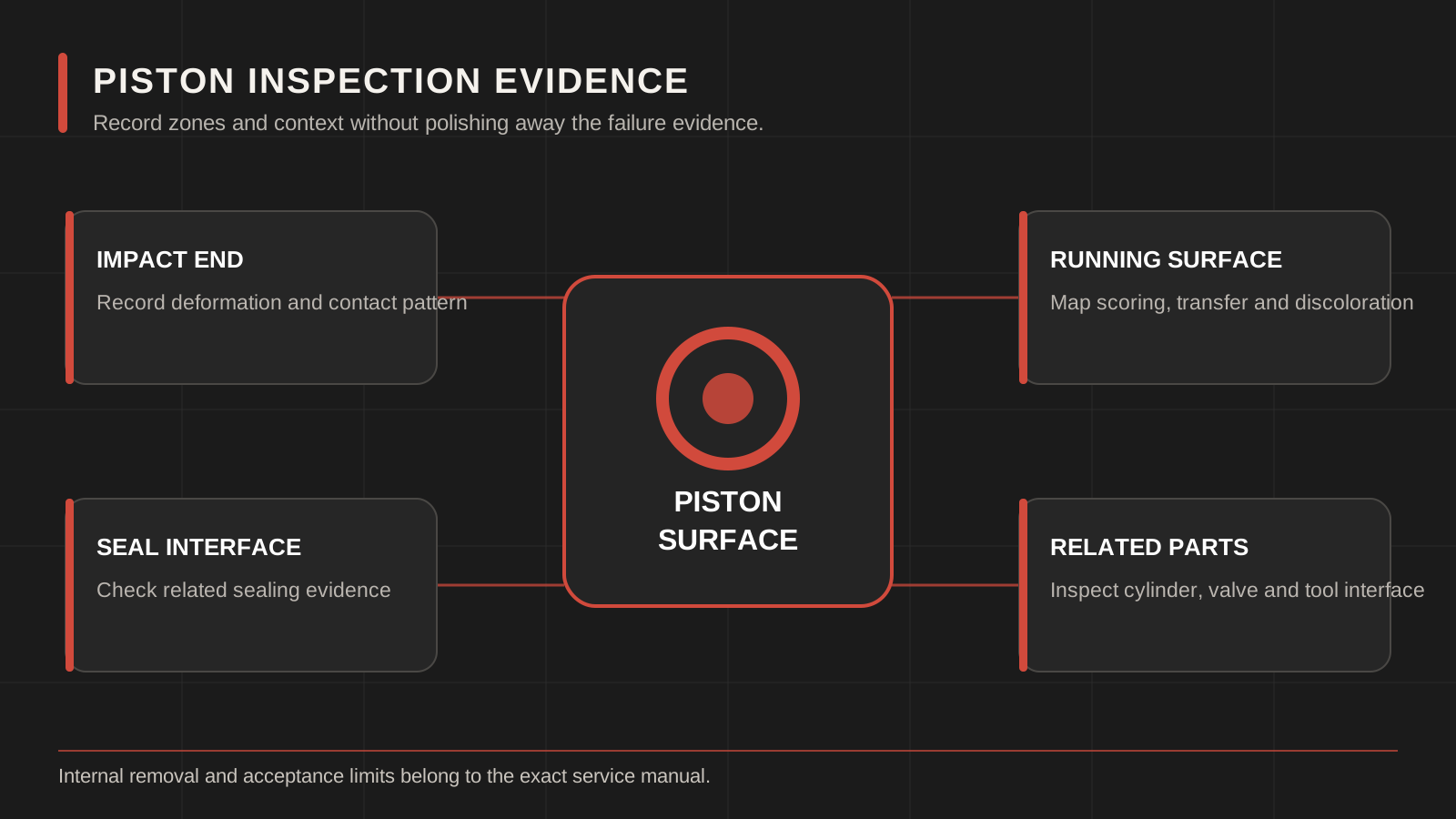
A useful failure record begins while the breaker is still assembled. It should let another technician understand the complaint without relying on a phrase such as “no power.” Record whether the breaker fails to start, strikes slowly, strikes irregularly, stops after warming, leaks externally, makes an unusual sound or damages the tool contact surface. Note whether the symptom began suddenly or developed over time.
- Breaker identity: brand, complete model, serial or production revision, body type and tool diameter.
- Carrier identity: machine model, auxiliary circuit type, attachment-control mode and any recent hydraulic work.
- Operating context: material, tool type, approximate duty pattern, ambient condition and whether the tool stayed correctly loaded.
- Service history: operating hours if known, last seal or piston work, oil/filter event, hose failure, overheating or contamination incident.
- External checks: tool and bushing condition, visible leaks, hose damage, loose fasteners and carrier warnings.
- Approved test data: only measurements taken with the exact manufacturer procedure and identified test points.
Video can be useful when it shows the whole breaker, carrier display and operating condition in one continuous clip. A close-up of vibration without the tool position or material often removes the context required to interpret the symptom.
What a Technician Looks for During Piston Inspection
Once the unit is made safe and opened under the correct service procedure, the technician inspects the piston as part of an assembly. The purpose is not just to label marks but to determine whether they are normal contact evidence, contamination damage, lubrication-related damage, misalignment, overheating or a consequence of another failed part.
| Evidence | What to record | What not to assume |
|---|---|---|
| Impact end | Full-face photograph, edge condition, contact pattern and matching tool-end condition. | A damaged face does not by itself identify the initiating cause. |
| Sliding surfaces | Location, direction and length of scoring, discoloration or material transfer. | Do not polish and reuse before checking the manual’s acceptance criteria. |
| Diameter readings | Instrument, reference points, orientation and repeat readings at labeled locations. | No universal diameter or clearance applies across breaker models. |
| Cylinder and guides | Bore/guide condition, contamination evidence and corresponding mark locations. | A new piston cannot correct a damaged mating surface. |
| Seals and oil | Seal location, debris, oil condition and filter findings where available. | Replacing seals alone may not remove the damage mechanism. |
Damage Patterns Are Clues, Not Standalone Diagnoses
Scoring or longitudinal marks
Scoring can be associated with contamination, damaged mating surfaces, inadequate lubrication at a relevant interface, misalignment or abnormal contact. The workshop should photograph both the piston and the corresponding cylinder or guide area before cleaning removes evidence. A single photograph rarely establishes root cause.
Discoloration
Color change may indicate heat exposure, but lighting, oil film and surface finish can mislead. Record it under neutral light and compare it with nearby unaffected material. Do not grind away the surface to make the photograph look cleaner.
Impact-end deformation or chipping
The tool contact pattern, tool retention, bushing condition, operating alignment and blank-firing history should be reviewed with the piston. Replacing only the visibly damaged member can allow the same condition to damage the new part.
Cracking or suspected cracking
Stop reuse. Visual uncertainty should be escalated to the inspection method specified by the manufacturer or qualified repair provider. A phone photograph cannot certify structural integrity.
Related Parts to Review Before Ordering
A piston request commonly affects more than one line on a quotation. The related scope depends on the actual inspection, but the buyer and technician should consciously review the cylinder, guides, valve components, seals, tool top, bushings and contaminated-oil controls. The hydraulic breaker parts diagram provides an assembly-level map, while the seal-kit guide explains why kit contents must be confirmed by revision.
If debris is found, the service plan should also address exposed hoses, carrier oil and filtration according to the carrier and breaker manuals. Installing clean internal parts into a contaminated circuit defeats the purpose of the repair.
How to Build a Piston Measurement Record
Ask the supplier or service manual which locations matter before taking dimensions. Then produce a marked sketch with reference letters rather than a loose list. Include the measurement tool and resolution, units, surface condition, workshop temperature if relevant, and at least two readings where repeatability matters. Keep the original photographs at full resolution.
Do not infer nominal size by rounding a worn measurement. A measured value documents the received part; it does not automatically state the production drawing dimension. If a supplier proposes an alternative, request a drawing that identifies every critical interface and written confirmation of the model/revision used for matching.
Keep raw readings and photographs separate from the final accept/reject decision. That lets another reviewer check the evidence if the manual revision changes or a matched cylinder is proposed later. A pass/fail label without source readings cannot support a repeatable repair.
How to Review a Hydraulic Breaker Piston Quotation
| Quotation item | Evidence expected | Question to ask |
|---|---|---|
| Application | Breaker brand, model and serial/revision or a documented measurement match. | Which identity evidence controlled this selection? |
| Part identity | Supplier part number, drawing item and revision where applicable. | Is it supplied alone or as a matched set? |
| Dimensions/interfaces | Controlled drawing or written comparison of critical interfaces. | Which values still require buyer confirmation? |
| Related scope | Explicit inclusions and separately recommended inspection parts. | Are seals, guides or other components excluded? |
| Commercial status | Quantity, availability, lead time, packing, destination and terms in writing. | Is current stock confirmed or only historically supplied? |
Common Piston Ordering Mistakes
- Ordering from excavator tonnage: the carrier class does not identify the percussion unit.
- Using one dimension: a tool or piston diameter cannot prove every shoulder, groove and contact interface.
- Cleaning before documenting: aggressive cleaning can remove debris, transfer marks and location evidence.
- Replacing the piston only: damaged mating parts or contamination can immediately affect the replacement.
- Accepting “fits many models” without a drawing: cross-reference claims need written evidence for the exact revision.
- Assuming material or heat treatment: request documented specification; appearance and color are not proof.
Copy-and-Send Piston Request
Hydraulic breaker piston inquiry
Breaker brand / full model / serial: ___
Body and power-cell markings: ___
Tool diameter: ___ mm
Carrier model and auxiliary circuit: ___
Complaint and when it occurs: ___
Service, oil/filter and contamination history: ___
Technician inspection result: ___
Drawing item or existing part number: ___
Labeled piston measurements attached: yes / no
Photos attached: breaker / nameplate / piston faces / sliding surface / cylinder / tool
Quantity and destination: ___
Please confirm: fitment basis / part revision / related-parts scope / availability.
Frequently Asked Questions
Does weak impact mean the piston is worn?
No. Weak or irregular impact has several possible hydraulic, gas, valve, seal, tool and operating causes. Diagnose the system before ordering a piston.
Can a scored hydraulic breaker piston be polished and reused?
Only the exact manufacturer criteria and a qualified inspection can answer that. Uncontrolled polishing changes geometry and surface condition and can hide the original damage evidence.
Can I match a piston from its outside diameter?
Not reliably. Overall length, working sections, shoulders, grooves, impact end and cylinder/valve revision also matter.
Should I order a seal kit with the piston?
Internal service commonly affects seals, but the correct kit and complete scope depend on the model and repair procedure. Confirm the exact included items.
Does LICHI guarantee cross-brand piston compatibility?
No universal compatibility is claimed. LICHI reviews supplied identity, drawings and measurements, then states the confirmed scope in the quotation.
Manufacturer Reference Used for This Guide
The official NPK hydraulic hammer operator manual demonstrates the model-specific inspection and service-document boundary. It is a workflow reference only and does not define LICHI piston dimensions or acceptance criteria.
Request a Model-Matched Piston Review
Send the identification pack, symptom record, workshop report and labeled measurements through LICHI contact. For a broader parts plan, use the spare-parts support hub. Final fitment, material specification, inspection scope, availability, price, packing and lead time require written confirmation for the exact breaker.
Keep Comparing
Compare more breaker models and buyer guides related to this topic.


