
Hydraulic Breaker Seal Kit Guide: Match the Right Kit
Identify the correct hydraulic breaker seal kit by model, serial, service scope and drawing, then verify contents and fitment before ordering.
All buyer guides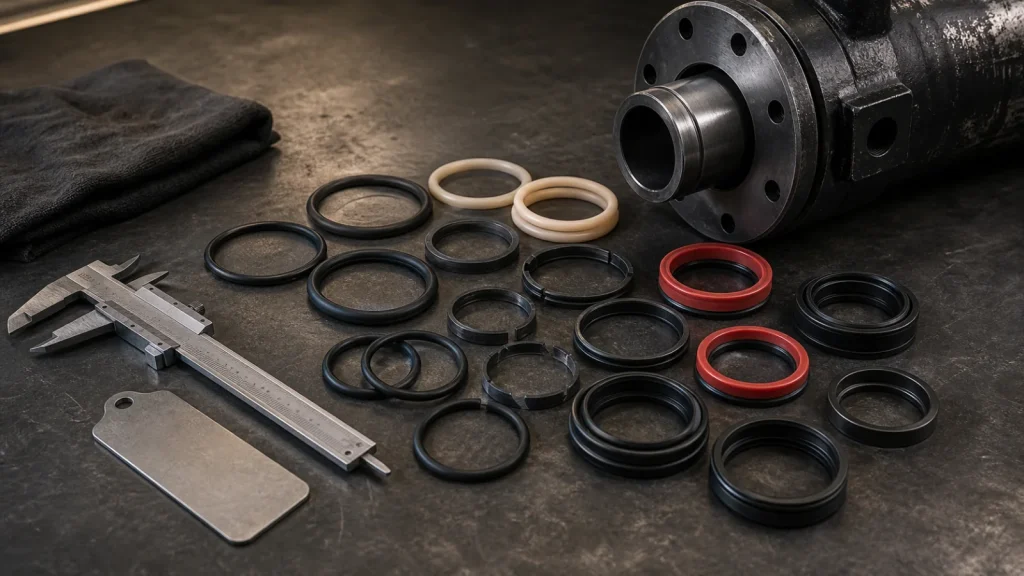
A hydraulic breaker seal kit should be ordered from the breaker identity and cylinder revision, not from excavator tonnage or chisel diameter alone. Two breakers can look similar outside and still use different O-rings, backup rings, wipers, rod seals or accumulator seals. The practical goal is therefore not to find “a seal kit,” but to identify the exact kit and confirm what it contains before the breaker is dismantled.
This guide is for owners, dealers and service teams preparing a parts request. It explains the information that reduces wrong-kit orders, the visible evidence worth recording, and the questions a quotation should answer. It is not a seal-replacement procedure. Stored hydraulic and gas pressure, heavy components and model-specific seal orientation make internal work a trained-technician task.
Safety boundary: Stop the carrier, isolate the work area and follow the exact manufacturer manual before inspection or service. Never use your hand to search for a pressurized leak. Depressurization, accumulator work, disassembly, seal installation, torque and testing must be performed by qualified personnel using the correct model documentation.
What Is in a Hydraulic Breaker Seal Kit?
A seal kit is a model-specific package of elastomer and supporting sealing parts used at selected interfaces inside a breaker. Depending on design, a package may contain O-rings, backup rings, wipers, piston-area seals, cover seals, port seals or accumulator-related items. The name printed on a bag does not prove that every seal required for a complete rebuild is inside.
Official product information illustrates why the identity matters. Bobcat’s breaker seal-kit listing describes several seal types but also tells buyers to check the serial-number parts catalog because parts can change. Epiroc service information likewise separates cylinder seals, filling-valve seals and port seals by assembly. These examples do not establish LICHI fitment; they demonstrate that kit content and revision are specific, not universal.
Identity before quantity
Model and serial evidence must lead the parts request
- 1
Identify the breakerBrand, full model, serial or production revision and body type
- 2
Locate the symptomRecord where oil first appears; do not diagnose from the lowest drip point
- 3
Confirm the service scopeExternal connection, selected assembly, cylinder reseal or complete overhaul
- 4
Match the parts drawingVerify kit part number, revision and included items
- 5
Release the orderOnly after the quotation states confirmed fitment and exclusions
Why Model and Serial Data Control the Match
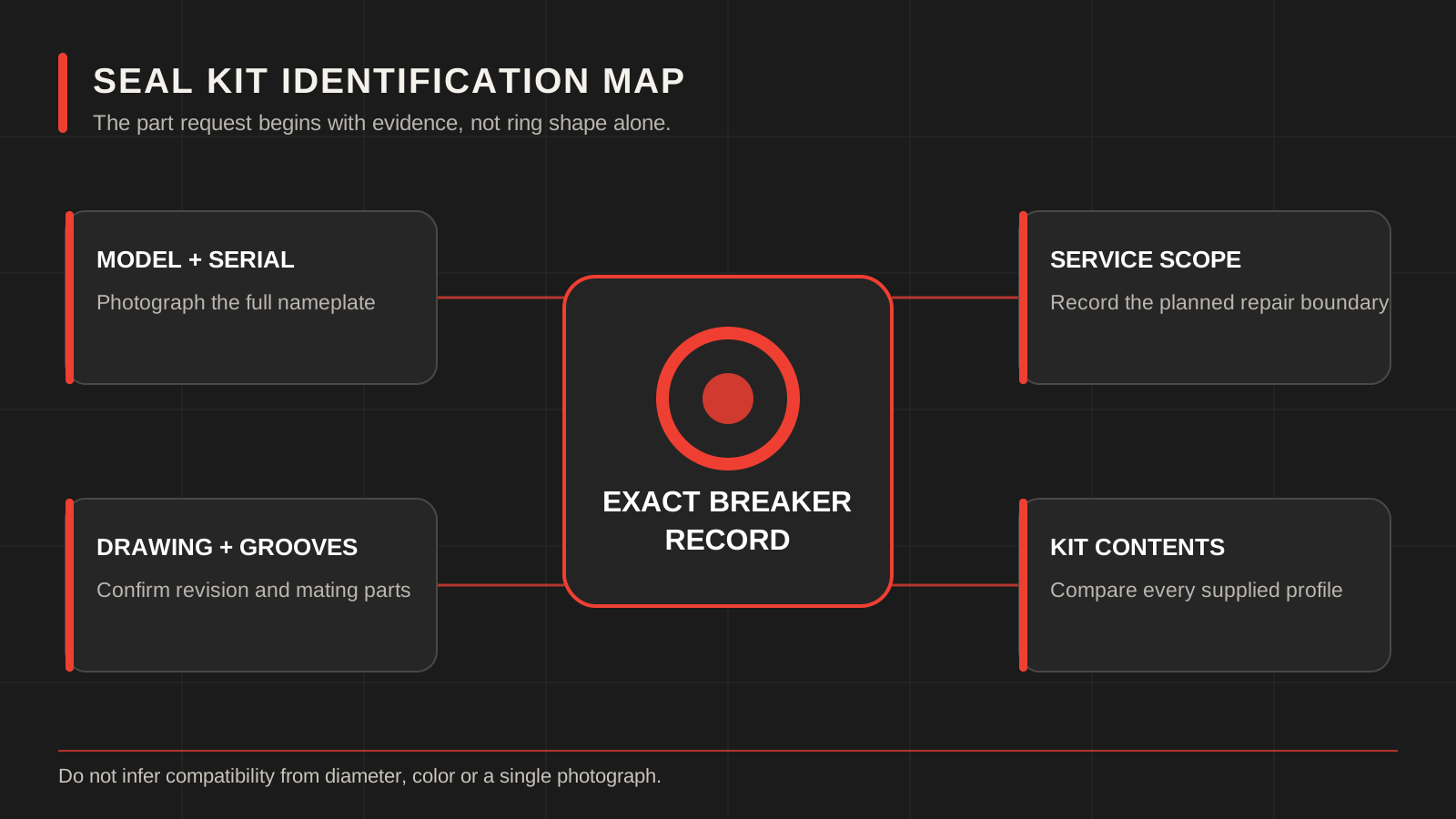
Manufacturers revise seal grooves, valve covers, cylinders and accumulators during a product’s life. A familiar model name can therefore cover more than one internal version. Packaging may also use a kit number that replaces an older number. The safest request connects three things: the breaker identification, the exact parts illustration or supplier drawing, and the list of seals supplied under the quoted kit number.
Chisel diameter remains useful supporting evidence, especially when a nameplate is missing, but it is not a primary key. Excavator model is even less specific: the same carrier can operate breakers from different manufacturers and construction families.
Seal Kit Evidence to Collect Before Disassembly
Good evidence protects both the buyer and the technician. It lets the supplier review the likely assembly while the breaker is still complete and gives the workshop a record of the original condition.
- Complete breaker photographs: front, rear and both sides, including the housing and hose ports.
- Nameplate and serial evidence: readable plate, stamped numbers, casting marks and any previous parts label.
- Leak-start evidence: clean the exterior only after safe shutdown, then photograph where fluid first reappears. Record whether the breaker was cold, warm, resting or operating.
- Fluid description: hydraulic oil, grease, mixed contamination or uncertain. Note color and location without tasting or touching pressurized fluid.
- Operating history: hours if known, last service, recent hose work, overheating, weak impact or contaminated-oil event.
- Workshop diagnosis: the assembly the trained technician intends to open and any related hard-part inspection required.
If the breaker is already dismantled, keep every removed seal grouped by its original location. Lay parts on a clean labeled sheet and photograph them with the drawing item numbers. A mixed pile of damaged seals is poor identification evidence because similar diameters can belong to different grooves.
Seal Kit, Rebuild Kit and Repair Kit Are Not Always the Same
| Term on a quotation | What it may mean | What the buyer must confirm |
|---|---|---|
| Seal kit | A selected group of sealing elements for one or more breaker assemblies. | Exact included item numbers, quantities and model/serial applicability. |
| Cylinder seal kit | Seals associated with the main cylinder or percussion unit. | Whether valve-cover, port, accumulator or front-head seals are excluded. |
| Accumulator repair kit | May include a diaphragm, support, charge-valve seals or fasteners for a specific accumulator design. | That the breaker actually uses that accumulator type; pressure work remains model-specific. |
| Rebuild / overhaul kit | A broader package that may combine seals with wear or service parts. | Which hard parts, guides, fasteners or consumables are included and which remain inspection-based. |
| O-ring kit | A limited collection of O-rings, sometimes for ports or covers only. | It must not be assumed to replace every dynamic seal or wiper in the breaker. |
What a Seal Kit Cannot Fix
New seals cannot correct a scored piston, damaged cylinder bore, worn guide surface, cracked component, incorrect hose connection or hydraulic condition outside the breaker’s approved range. Repeated seal failure is a reason to investigate the cause, not to order another identical bag immediately.
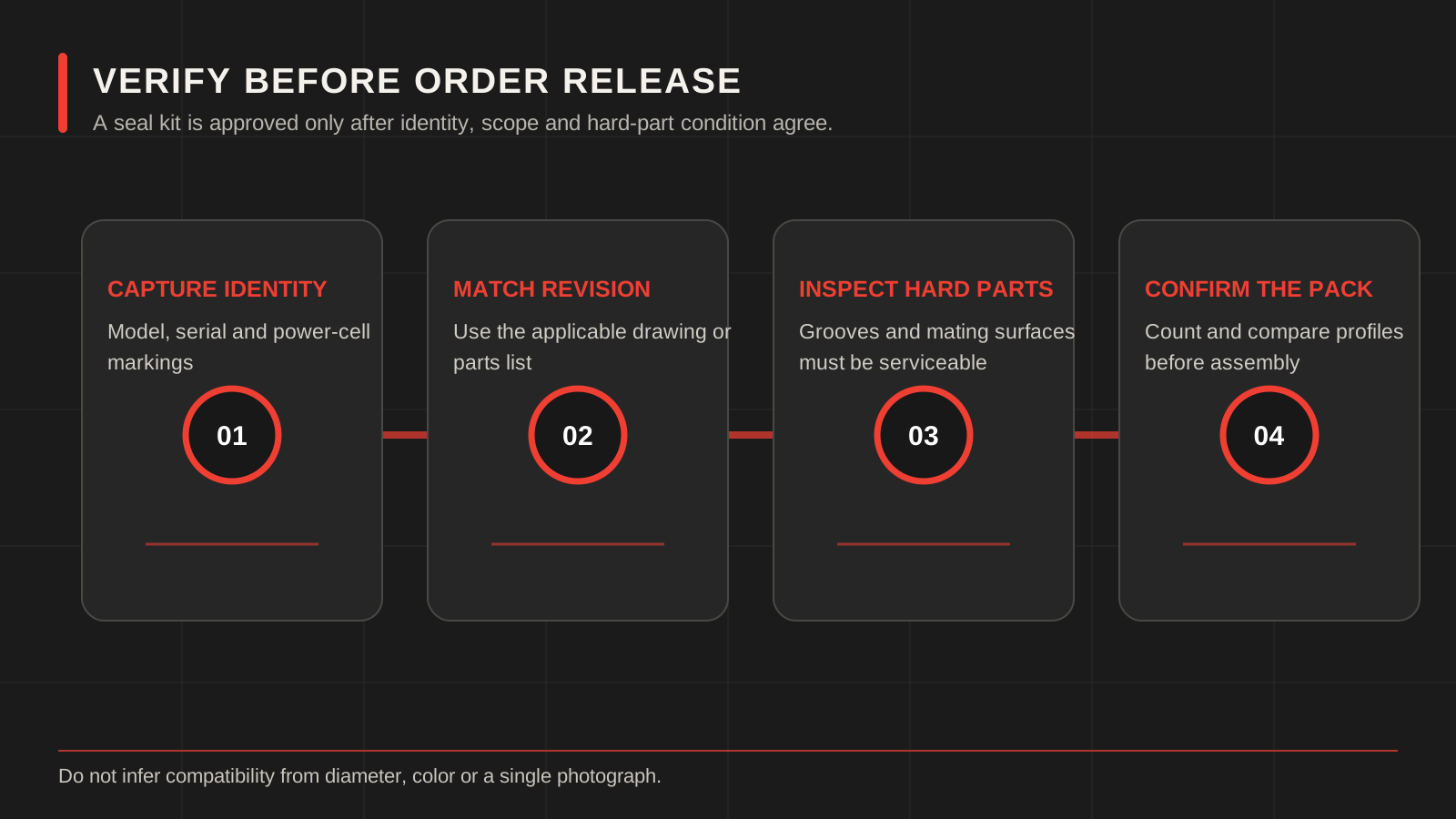
Before reassembly, the trained technician should inspect the related hard parts according to the service manual. The supplier may need measurements or photographs after disassembly before releasing major components. This staged approach is slower than guessing but usually cheaper than repeating labor and contaminating the carrier system.
How to Read a Seal Kit Quotation
A useful quotation does more than state “one set.” It should identify the breaker model or evidence used for matching, the kit number, quantity, kit contents or referenced drawing, exclusions, compatibility status, packing and commercial terms. If the serial is unknown, the quotation should say that fitment is provisional and list the measurements or photos required before shipment.
| Quotation field | Acceptable evidence | Risk signal |
|---|---|---|
| Breaker identity | Full model plus serial/revision or documented substitute evidence. | Only excavator tonnage or chisel diameter is shown. |
| Kit identity | Supplier part number tied to a drawing or explicit contents list. | Generic “seal kit” with no traceable item list. |
| Fitment status | Confirmed, or clearly pending named evidence. | Universal compatibility language. |
| Scope | Cylinder, accumulator, valve, port or complete service scope stated. | Buyer assumes every seal is included. |
| Commercial terms | Quantity, packing, destination, availability and lead time confirmed in writing. | Website image or past order is treated as current stock proof. |
Common Hydraulic Breaker Seal Kit Ordering Mistakes
Ordering by breaker color or housing shape
Housing design is not a reliable internal identifier. Power cells can be installed in similar box or side-type frames, and exterior repainting can hide the original identity.
Assuming an oil leak proves seal failure
Oil can travel down a hose, port or housing before it drips near the tool. Start with the external source-observation process in the hydraulic breaker oil-leak guide, then let a technician determine the repair scope.
Replacing seals without checking contamination
Dirty oil, debris introduced through uncapped hoses or damaged mating surfaces can shorten new-seal life. Follow the carrier manufacturer’s oil and filter requirements and keep opened components clean.
Mixing removed seals from different locations
A service bench needs location labels. Mixing parts destroys evidence about orientation, assembly and failure location and can make a correct kit look incomplete.
Buying major hard parts before inspection
A piston or cylinder should not be added “just in case” unless downtime economics and a model-matched inspection plan justify it. The hydraulic breaker parts diagram explains which groups require separate identification.
Receiving and Preserving a Seal Kit Before Service
On arrival, compare the package label, supplier part number, stated revision and quantity with the approved quotation before opening individual sealed bags. Photograph any damaged, unsealed or mislabeled packaging and quarantine it. Keep elastomer parts in their original identified packaging under the supplier’s stated storage conditions; protect them from dirt, unapproved oil, sunlight, heat and deformation.
Do not spread every ring on a workshop bench for a catalog photograph. Open only when the controlled service requires it, then keep items tied to drawing numbers and locations. If the package appears incomplete, use the quotation’s contents list and packing evidence to resolve it before dismantling the breaker. This preserves both cleanliness and the commercial record.
Copy-and-Send Seal Kit Request
Hydraulic breaker seal kit inquiry
Breaker brand and full model: ___
Serial / production revision: ___
Excavator model: ___
Tool diameter: ___ mm
Requested service scope: cylinder / valve / accumulator / complete overhaul / uncertain
Leak or service reason: ___
Last service and operating history: ___
Existing kit or seal markings: ___
Photos attached: complete breaker / nameplate / leak start / removed seals / drawing
Quantity and destination: ___
Please confirm: kit number / contents / fitment evidence / exclusions / availability.
Frequently Asked Questions
Can I buy a hydraulic breaker seal kit using only the chisel diameter?
No. Tool diameter can support identification but does not confirm the cylinder, accumulator or seal revision. Provide the full model, serial and photos whenever possible.
Does a seal kit include the diaphragm?
Not necessarily. Some manufacturers list accumulator or diaphragm repair items separately. Confirm the item list rather than inferring from the word “complete.”
Should every seal be replaced after a breaker is dismantled?
Follow the exact service manual and technician’s work scope. Some manufacturer repair instructions require complete seal replacement when a percussion unit is opened, but that rule must not be generalized without the correct documentation.
Can new seals stop every hydraulic breaker oil leak?
No. External fittings, hoses, damaged hard parts, incorrect assembly and hydraulic-system conditions can also cause leakage. Diagnose the source before ordering.
Can LICHI confirm another brand’s seal kit from a photo?
A photo may narrow the search but is not a guarantee. Compatibility is reviewed case by case and must be confirmed in the written quotation.
Manufacturer Reference Used for This Guide
Bobcat’s official hydraulic breaker seal-kit listing shows both a defined contents list and a serial-number compatibility warning. It supports the identification workflow on this page but does not establish fitment for a LICHI or any other breaker.
Request a Model-Matched Seal Kit Review
Send the identity pack, symptom record, service scope and destination through LICHI contact. The hydraulic breaker parts support hub explains the commercial review path, while the first-order spare-parts guide helps separate routine service items from expensive diagnosed components.
Final fitment, kit contents, materials, availability, price, packing and lead time remain subject to written confirmation for the exact breaker.
Keep Comparing
Compare more breaker models and buyer guides related to this topic.


