
What Is a Hydraulic Breaker Used For? Jobs and Sizes
What is a hydraulic breaker used for? Demolition, road work, trenching, foundations, quarrying and mining, with the carrier size and LICH model for each job.
All buyer guides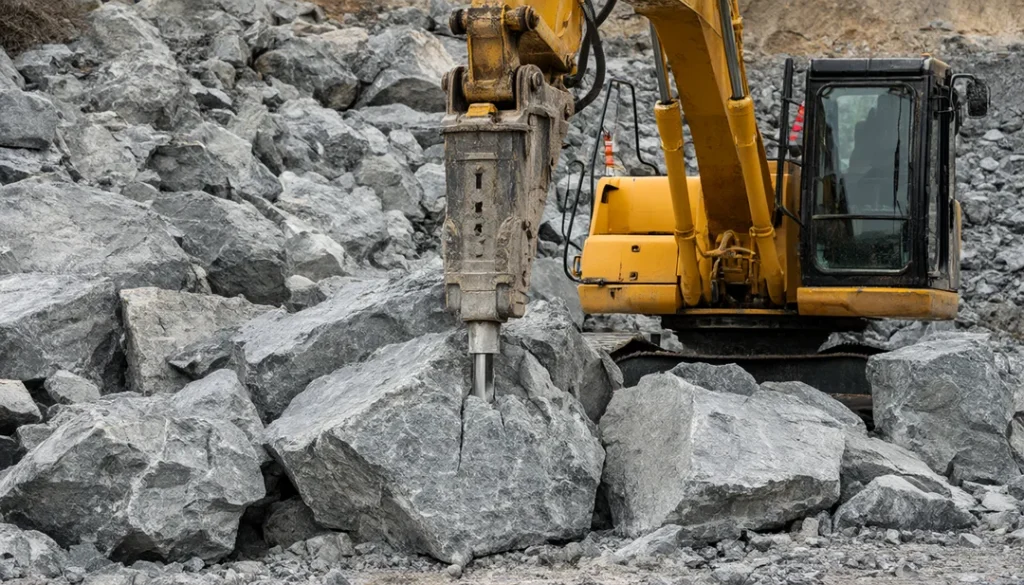
What is a hydraulic breaker used for? In short: breaking hard material that a bucket cannot dig. A hydraulic breaker mounts on an excavator, backhoe loader or skid steer in place of the bucket and drives a steel chisel into concrete, rock, asphalt or frozen ground hundreds of times a minute. This guide lists the main jobs, the carrier size each one usually needs, and the LICH models built for it, using the application notes and figures on our model pages.
What is a hydraulic breaker used for on site?
| Use | Typical carrier | LICH models | Impact energy |
|---|---|---|---|
| Indoor and urban demolition, paths, small slabs | 1–5 t | LC-40, LC-45, LC-53 | 204–406 J |
| Road and pavement breaking, trenching, foundation excavation | 1–7 t | LC-40 to LC-75 | 204–1,835 J |
| Concrete demolition and secondary rock breaking | 7–12 t | LC-75, LC-100 | 1,835–3,102 J |
| Rock breaking, quarrying, road construction | 20–36 t | LC-135 to LC-165 | 6,190–13,200 J |
| Primary rock breaking, mining, heavy concrete | 36–55 t | LC-175, LC-195, LC-200 | 15,500–29,700 J |
| Open-pit mining, large reinforced concrete | 60–80 t | LC-230 | On request |
Uses and figures from the LICH model specifications, read on 22 October 2026. Every model is in the hydraulic breaker specifications chart.
What is a hydraulic breaker used for: the main jobs
Demolition
Breaking concrete slabs, walls, columns and foundations so the debris can be loaded and the rebar cut out. Silent box-type bodies are common in towns. See hydraulic breaker for demolition and hydraulic concrete breaker.
Road work and trenching
Cutting asphalt and concrete pavement for repairs, and breaking rock or hard layers in utility trenches where a bucket stalls. Small, fast breakers suit this work.
Foundation excavation
Removing rock and old footings in basements and building pits, often in tight space on a mid-size excavator.
Quarrying and secondary breaking
Reducing oversize boulders after blasting so they fit the crusher, and breaking the face where blasting is not allowed. See hydraulic breaker for quarry work.
Mining
Primary rock breaking at the face and heavy trenching in hard ground, with the largest breakers on 36–80 t carriers.
Special jobs
Breaking rock under water with a breaker set up for submerged work; see underwater hydraulic breaker.
Which machines carry a hydraulic breaker?
- Excavators: the most common carrier, from 1 t mini excavators to 80 t machines. See breakers for mini excavators.
- Backhoe loaders: a popular choice for road crews; see the backhoe breaker guide.
- Skid steers: for light breaking on small sites; see skid steer hydraulic breaker.
What a hydraulic breaker is not used for
A breaker is built to drive a chisel straight into hard material. Using it to pry, lift, sweep or move rock overloads the chisel and the front head, and firing it without the tool pressed against the material damages the breaker. For digging soil, use the bucket.
Questions buyers ask
What is a hydraulic breaker used for in construction?
Mostly demolition, road and trench work, and foundation excavation, on 1–12 t excavators and backhoe loaders.
Can a hydraulic breaker remove a tree stump?
It can split a stump, but a bucket, ripper or stump grinder removes it faster. A breaker earns its keep on rock and concrete.
Is a hydraulic breaker the same as a hydraulic hammer?
Yes, the two names describe the same attachment. See hydraulic breaker vs hydraulic hammer.
Now that you know what a hydraulic breaker is used for, see how a hydraulic breaker works or send us your carrier model and the material you break. We will recommend the LICH model for the job.
Related reading: sizes for the smallest and largest carriers in the hydraulic breaker for 1 ton excavator and hydraulic breaker for 40 ton excavator guides.
Keep Comparing
Compare more breaker models and buyer guides related to this topic.


