
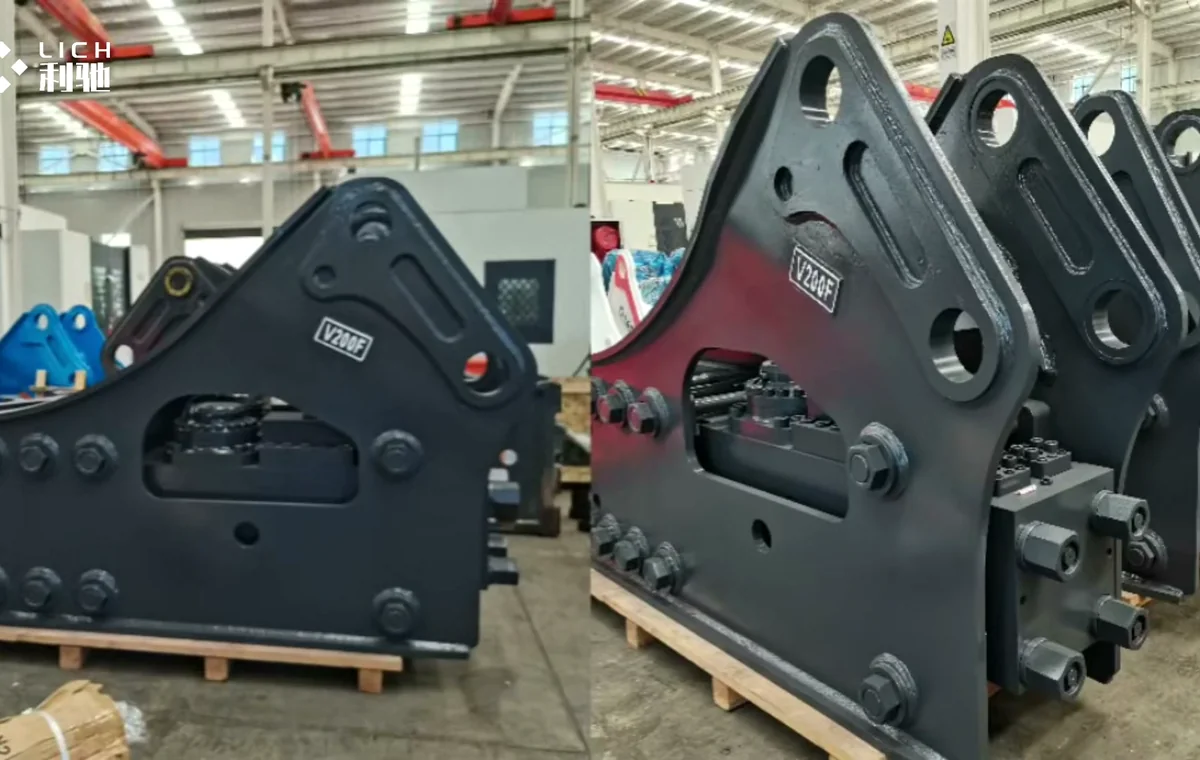
Hydraulic Breakers for Mini Excavators
Choose a hydraulic breaker for mini excavator work by operating weight, auxiliary oil flow, pressure, bracket dimensions, tool diameter and worksite. A mini excavator hydraulic breaker must match both the carrier circuit and its mounting interface.
Use this page to narrow a hydraulic breaker range for a mini excavator, then confirm operating weight, oil flow, working pressure, bracket or coupler dimensions, worksite, quantity and destination.
Mini does not mean one size
Mini excavators cover several operating-weight and hydraulic-output ranges. The carrier model and hydraulic circuit are required before a breaker model is confirmed.
Weight is the first screen
Carrier operating weight narrows the range, but the final selection still requires oil flow, working pressure, bracket dimensions and the intended material.
Compact access changes the job
Trenches, indoor demolition and narrow jobsites can limit working angle, hose routing and housing choice. Record those constraints before quoting.
The bracket is part of the match
A suitable breaker still needs the correct pin dimensions, center distance, dipper width or coupler information. Model matching and mounting must be checked together.
Start With the Mini-Excavator Class
Use the carrier class to open the correct model range, then confirm the exact machine record before choosing a product.
0–6 t carrier filter
Use the 0–6 t archive filter as the first catalog screen for small carriers. A product shown in the filter is still subject to exact carrier, hydraulic and bracket confirmation.
View details6–18 t carrier filter
Larger compact excavators can overlap the next carrier band. Use the 6–18 t filter when the machine operating weight or proposed breaker falls outside the small-carrier range.
View detailsMatching guide
Use the full LICHI matching guide to compare carrier weight, flow, pressure, tool diameter, body structure and bracket information before requesting a quote.
View detailsChecked quotation
Send one complete carrier record instead of asking for a model from tonnage alone. The reply can then state what is confirmed and which fields remain open.
View detailsMini Excavator Hydraulic Breaker: Six Matching Checks
These checks protect the carrier, breaker and buyer from an incomplete model match.
Carrier model and weight
Record the brand, full model and operating weight from a reliable machine source or nameplate. Do not substitute bucket capacity or transport weight.
Auxiliary oil flow
Record the available breaker-circuit flow in L/min or gpm and note whether the value is adjustable. The carrier and breaker ranges must overlap.
Working pressure
Record the auxiliary working pressure and relief setting when available. Pressure must remain within the proposed breaker requirement.
Pin or coupler dimensions
Send pin diameter, pin-center distance, dipper width or coupler details with clear photos. The bracket cannot be confirmed from the excavator name alone.
Material and access
Describe concrete, asphalt, trench material or rock and include thickness, hardness, access limits and expected working direction.
Order and destination
State quantity, tool preference, starter parts, OEM request and destination port so the quotation covers the complete supply scope.
Mini-Excavator Breaker Worksite Routes
Select the body and tool after the jobsite is known; the same mini excavator can face very different work.
Utility trenching
Record trench width, depth, access and underground restrictions. A compact serviceable body may be practical, subject to the verified model match.
View detailsConcrete demolition
Send slab or wall thickness, reinforcement and indoor or urban constraints. Silent housing can be discussed where enclosure and noise control matter.
View detailsRoad and asphalt work
Describe pavement thickness, edge work and required tool action. Hose routing and working angle need attention on compact carriers.
View detailsRock breaking
Provide rock photos, hardness information if known and the required task. Continuous quarry production and occasional trench rock are different selection cases.
View detailsQuote a Hydraulic Breaker for Mini Excavator Work
One complete message is faster to check than several isolated model or price questions.
Frequently Asked Questions
Plain answers before the first quote.
No. Operating weight is the first screen, but oil flow, pressure, bracket or coupler dimensions and the worksite must be confirmed before the final model is quoted.
The answer depends on the full carrier record. Use the 0–6 t or 6–18 t catalog filter to narrow the range, then send the exact machine and hydraulic data for a checked recommendation.
No. A breaker outside the carrier hydraulic or weight range can create an unsuitable match. The goal is an overlapping carrier-breaker range and a tool suited to the material, not the largest attachment.
Send pin diameter, pin-center distance and dipper width, or provide the coupler brand, model and clear dimensional photos. The required fields depend on the mounting system.
A silent or box housing can be considered when a confirmed model falls within the carrier hydraulic and weight range. Noise preference does not replace the model and bracket checks.
No. Website ranges are catalog guidance. The written quotation based on the submitted carrier and jobsite record controls the final proposed configuration.
Ready to check the right breaker?
Send carrier model, hydraulic data, quantity and destination port. LICHI can reply with a checked model path.
