
Hydraulic Breaker Production Rates: Measure the Real Job
Measure site-specific breaker output with a practical field log instead of relying on universal production claims.
All buyer guides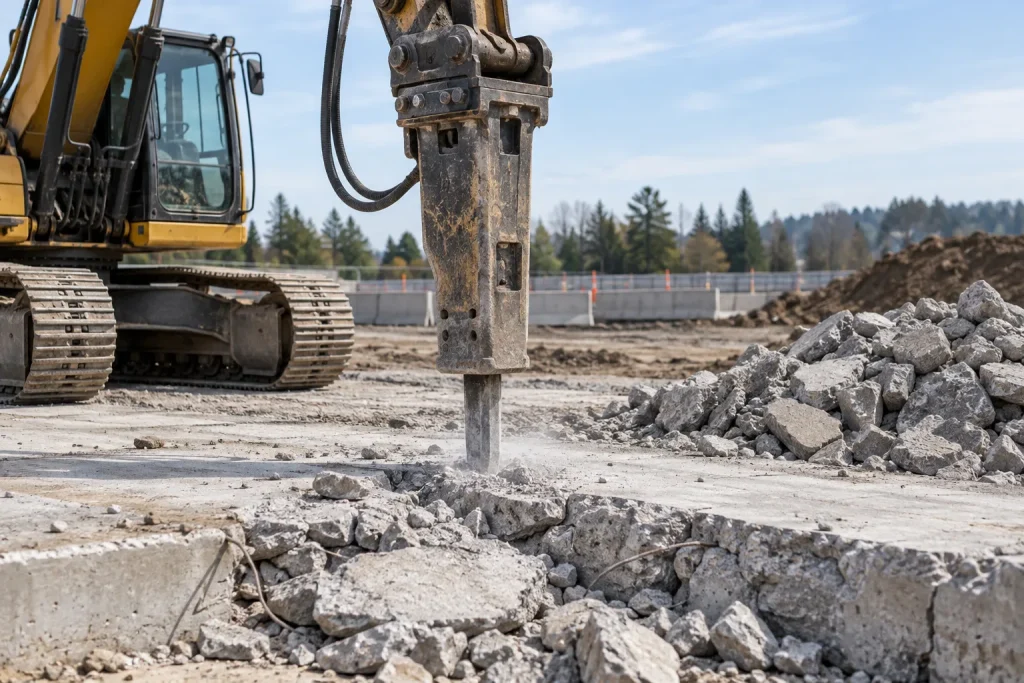
Hydraulic breaker production rates are not a single number printed on a product sheet. Material, access, operator technique and support equipment change the result. Use a short, controlled site trial to estimate output for a particular project.
Hydraulic breaker production rates: choose a unit
Before comparing hydraulic breaker production rates, choose a unit such as cubic metres of material removed per productive hour. Say whether time includes repositioning, hauling, tool changes and planned breaks. Different definitions can make the same job look faster or slower.
Hydraulic breaker production rates need a documented denominator. Hydraulic breaker production rates also need notes on material, operator, loading delays and the measured area.
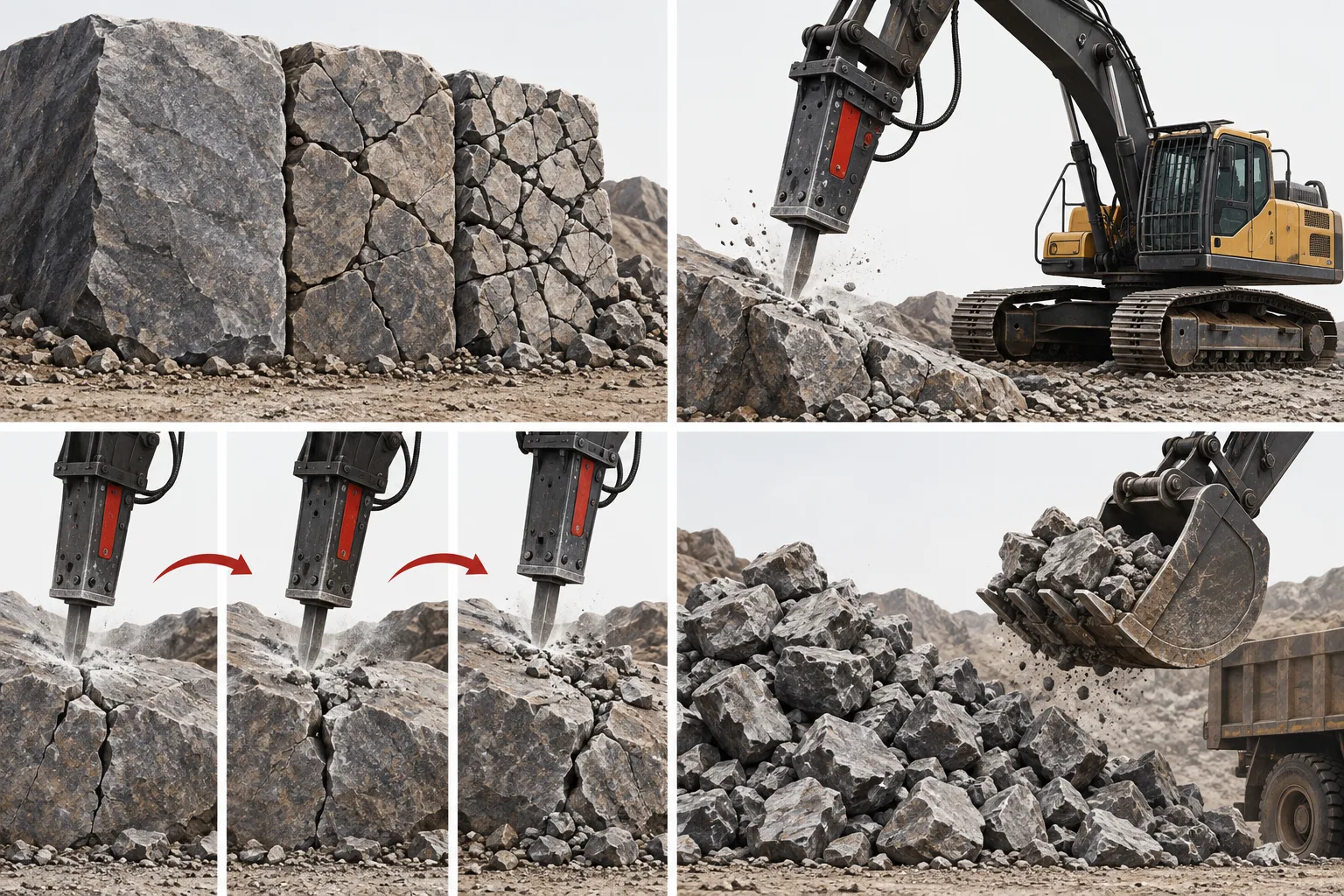
For hydraulic breaker production rates in concrete, record slab thickness, reinforcement and whether cuts or exposed edges exist. For rock, document apparent fractures, block size and working position. Avoid transferring a rate from one material to another without a trial.
Run a fair field test
To establish hydraulic breaker production rates, identify a representative area and record its dimensions before work. Log start and stop times separately from active breaking time. Keep a note of delays, carrier setup, tool condition and the removal method.
Photographs and a simple site sketch help explain hydraulic breaker production rates later. Record the excavator model, attachment model and tool shape. If the material changes across the site, split the results into separate zones rather than averaging away the difference.
Operator method affects hydraulic breaker production rates. The approved operating guide should govern tool angle, working from an edge and movement to a new impact point when progress slows. Do not force the tool sideways to chase a better output figure.

Turn observations into an estimate
Calculate hydraulic breaker production rates by dividing measured output by the time basis you defined. A second trial in a different area provides a useful range. Report the range and assumptions, rather than a precise figure unsupported by site evidence.
Use hydraulic breaker production rates to plan crew and haulage capacity, but separate breaking from loading and disposal. A breaker may wait for trucks or access even when its active striking performance has not changed.
If hydraulic breaker production rates fall unexpectedly, inspect the material, tool, hydraulic supply and work sequence before blaming attachment size. Ask a qualified service team to investigate abnormal heat, pressure or damage.
Compare these notes with our operating guide. Share your field log with LICHI when discussing hydraulic breaker production rates; no universal output is promised.
References: Caterpillar operating tips; Caterpillar hammer selection. The test method is a planning framework, not a certified productivity rating.
Keep Comparing
Compare more breaker models and buyer guides related to this topic.


