
Hydraulic Breaker Comparisons: Four LICHI Body Types
Hydraulic breaker comparisons for LICHI triangular, tower, silent and concentric structures, covering access, protection, mounting and worksite requirements.
All buyer guides
Hydraulic Breaker Comparisons Start After the Carrier Match
Useful hydraulic breaker comparisons separate body construction from impact performance. Triangular, tower, silent and concentric hydraulic breakers describe body construction, not four levels of impact power. The carrier, auxiliary hydraulic circuit, chisel diameter and application must be matched first. The body type then helps address access, protection, visibility, site restrictions and maintenance workflow.
This comparison uses LICHI’s public names: LC Triangular, LC Tower, LC Silent and LC Concentric. It explains the decision points without claiming that one structure is universally strongest or best.
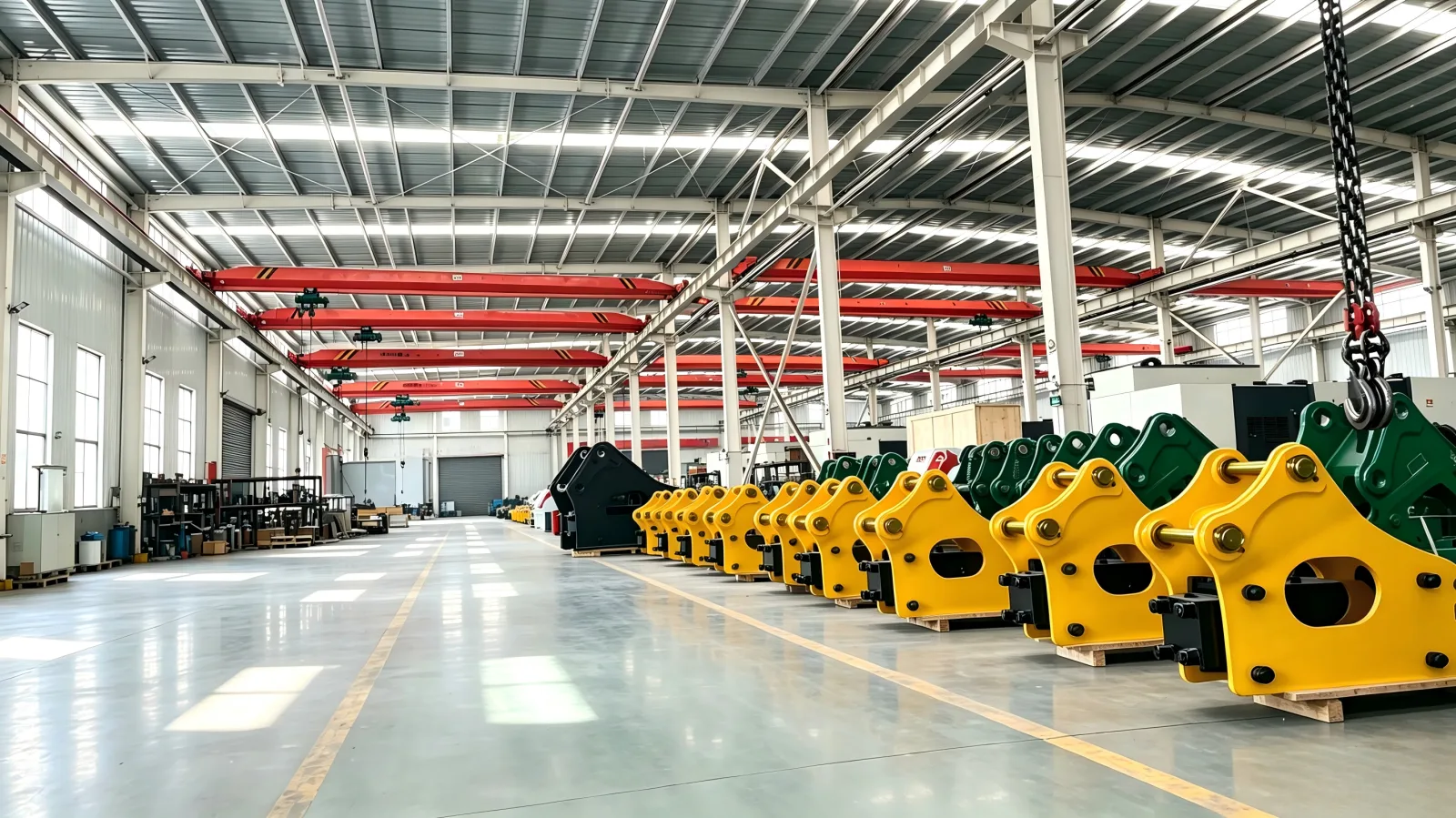
Quick Comparison of the Four LICHI Body Types
| Public body name | Visible construction | Questions to ask | Do not assume |
|---|---|---|---|
| LC Triangular | Open side-mounted frame | Is inspection access important? Is the open frame suitable for the site? | Open construction proves compatibility |
| LC Tower | Top-mounted vertical frame | Does the mounting route suit the carrier, access and working angle? | Top-mounted means more impact power |
| LC Silent | Enclosed box housing | Are outer protection, profile and noise control priorities? | “Silent” means no operating noise |
| LC Concentric | Integrated straight-body construction | Is this exact construction approved for the application and carrier? | A straight body fits every excavator |
LC Triangular Breaker
The triangular or side-mounted breaker uses an open frame around the power cell. The open structure gives visible access to key external areas and is a practical general-purpose body option where the site does not require an enclosed housing.
Selection still starts with the public LC model and chisel diameter. Confirm attachment weight, bracket, hydraulic flow, pressure, hoses and application. The open frame does not make a mismatched breaker safe, and it does not replace a protective operating method.
Questions before selecting triangular construction
- Will the open frame be exposed to repeated contact with demolition debris?
- Does the service team value direct visual access to external components?
- Are noise or outer-profile restrictions present at the site?
- Is the correct bracket available for the intended carrier or coupler?
LC Tower Breaker
The tower or top-mounted structure uses a vertical frame route. The name describes the mounting construction, not an automatic performance advantage. Its suitability depends on the machine interface, access, visibility, operating angle and worksite.
Ask for the exact tower-model drawing and complete attachment weight. Confirm how the hoses route through the machine’s working range and whether the operator can keep the tool aligned with the intended breaking direction.
Questions before selecting tower construction
- Does the mounting arrangement match the carrier or quick coupler?
- Can the hoses move without abrasion, stretching or sharp bends?
- Does the outer profile suit the available headroom and trench access?
- Can the operator see the tool and maintain correct alignment?
LC Silent Breaker
The silent or box-type breaker encloses the power cell in an outer housing. This structure can support outer protection and noise-control objectives, but the word “silent” is a body-category name. The carrier, tool, broken material and worksite still produce sound, vibration and impact noise.
Review the housing inspection points, wear pads or internal support arrangement for the exact model. Check how service tasks are performed and which fasteners or panels must be removed. Do not order a box body only from a marketing image.
Questions before selecting silent construction
- Is the site noise-sensitive, and what measurement or local limit applies?
- Is an enclosed outer profile useful around debris or nearby structures?
- Can the service team inspect the internal breaker as required?
- Are the housing parts and body-specific spares identified for the exact model?
LC Concentric Breaker
LICHI uses LC Concentric for the integrated straight-body construction. Do not call it “concentric type breaker” on one document and “one-piece straight hammer” on another. Use the same public name, LC model and chisel diameter on the quote, approval file, packing list and service request.
This body should be selected from exact product data and application review. A straight outer shape does not prove hydraulic or mechanical compatibility. Request the model drawing, operating range, attachment weight and mounting details.
Questions before selecting concentric construction
- Is the exact LC Concentric model available for the required chisel diameter?
- Does its complete attachment weight remain within the carrier limit?
- Does the mounting and hose route suit the machine?
- Has the application been reviewed instead of inferred from appearance?
Body Type Does Not Replace Hydraulic Matching
For every structure, collect the carrier brand and complete model, operating weight, auxiliary oil flow, working pressure, relief setting, attachment interface and work material. Compare those values with the proposed breaker record.
The same excavator tonnage can have different hydraulic options. The same chisel diameter can also appear in different breaker configurations. Keep the match provisional while any critical value is missing. Follow the hydraulic breaker matching workflow before production release.
A Seven-Step Body Selection Process
- Confirm the carrier: identify the complete machine model, hydraulic circuit and attachment limit.
- Confirm the breaker class: select the public LC model and chisel diameter from approved data.
- Describe the work: record material, application, duty pattern, access and operator visibility.
- Record site restrictions: document noise, overhead, trench, debris or urban requirements.
- Compare structures: evaluate access, housing, protection, dimensions and service workflow.
- Approve mounting: confirm bracket or coupler dimensions and hose routing.
- Write the final configuration: put body type, LC model and open technical items on the quotation.
Application Questions That Change the Decision
| Worksite question | Why it matters | Evidence |
|---|---|---|
| What material is being broken? | Tool selection and work method depend on the material | Photos, video and material description |
| Is the site noise-sensitive? | It may favor an enclosed structure and controlled schedule | Site rule or measurement requirement |
| Is access narrow or overhead-limited? | Outer dimensions and mounting profile become critical | Clearance measurements and site photos |
| Is debris contact frequent? | Outer protection and operator technique need review | Work cycle and debris environment |
| How will the breaker be serviced? | Access and body-specific parts affect maintenance workflow | Service capability and parts plan |
Common Naming and Selection Errors
- Calling LC Concentric “concentric type” on the website and “one-piece” on the quotation.
- Using body names as model numbers instead of recording LC model and diameter.
- Assuming LC Silent means the worksite will be silent.
- Assuming tower construction automatically increases impact energy.
- Choosing from a product photo without verifying weight, hydraulics and mounting.
- Reusing one bracket or hose arrangement across different carriers without approval.
Service Planning by Body Type
The maintenance requirement comes from the exact breaker model and service documentation, but the outer structure affects how the team reaches inspection points. Before purchase, ask which covers, plates, pads, fasteners or brackets must be removed for normal inspections and which items are body-specific.
For an enclosed LC Silent unit, record the housing parts and the process for inspecting the breaker inside it. For open LC Triangular and LC Tower structures, identify exposed areas that the operator must protect from debris contact. For LC Concentric, use the integrated model drawing rather than borrowing a parts list from a visually similar body.
Dealer stock should keep the power-cell service parts separate from body-specific plates, pads and fasteners. Tie both groups to the public LC model, body name and revision evidence.
Transport and Storage Questions
Outer dimensions and lifting points can differ between body structures. Ask for the approved packed dimensions, weight, lifting method and storage position for the exact configuration. Do not lift from hoses, the working tool or an unapproved housing feature.
During storage, protect hydraulic ports, keep identification readable and prevent the breaker from resting in an unstable position. If a bracket or chisel is packed separately, the packing list should identify which LC model and unit it belongs to.
How to Run a Dealer Comparison
- Select one carrier and one application instead of comparing catalog images.
- Ask for all available body structures in the same approved LC diameter class.
- Record complete attachment weight, outer dimensions, bracket, hoses and included parts for each.
- Compare site access, service workflow, body-specific spares and packing.
- Keep performance claims tied to exact technical data rather than body names.
- Choose a configuration and document why it fits the buyer’s conditions.
Body-Type Change Control
If an order changes from LC Triangular to LC Silent, or from LC Tower to LC Concentric, recheck the complete attachment. Update the product line, weight, dimensions, bracket or coupler interface, hose route, spare parts, packing and lead-time basis. Do not edit only the product label.
Keep the previous selection as superseded and ask both technical and commercial contacts to approve the new revision. This prevents the factory from following an old drawing while the sales record shows a new body.
What to Put on the Final Quotation
Record the public model, chisel diameter, body type, complete attachment weight, carrier model, hydraulic input, bracket or coupler basis, hose scope, included tools and unresolved conditions. If the body changes, recheck the complete configuration instead of editing only the product name.
Use the export quotation checklist for a complete commercial record. For body-specific product options, review LC Triangular, LC Tower, LC Silent and LC Concentric.
Final Decision Record
Keep a one-page decision record with the carrier, application, worksite restrictions, shortlisted structures and reason for the selected body. Mark every unresolved technical field. This prevents a later buyer or technician from treating the body name as the original selection logic.
Attach the approved product and bracket drawings, hose schedule and body-specific parts list. At delivery, compare the nameplate, LC model, chisel diameter, outer structure and included components with that record before commissioning.
For dealer inventory, do not assume one body mix suits every market. Review the actual carrier fleet, noise rules, service capability and customer applications, then stock model and body combinations that can be supported with matched parts and documents.
Reference Boundary
Major breaker manufacturers publish separate values for carrier class, tool diameter, oil flow, working pressure and service weight. That supports treating body construction as one field within a wider match. Use the intended carrier manual and LICHI data for the actual order; do not transfer another manufacturer’s model limits.
Frequently Asked Questions
Which hydraulic breaker type is best?
There is no universal best structure. Match the carrier and hydraulics first, then choose the body for application, access, protection, noise and service requirements.
Is a silent breaker completely quiet?
No. “Silent” identifies an enclosed body type. The machine, impact and broken material still generate noise and vibration.
Does a tower breaker hit harder?
The body name alone does not prove impact performance. Compare exact model data and carrier compatibility.
What is the correct name for the straight integrated breaker?
LICHI uses LC Concentric. Keep that public name consistent across the website, quotation, packing list and service records.
Can I change body type without rechecking the carrier?
No. Recheck attachment weight, mounting, hose route and the exact breaker data whenever the configuration changes.
Keep Comparing
Compare more breaker models and buyer guides related to this topic.


