
Hydraulic Breaker Grease System: What to Check Before Work
Identify manual and automatic lubrication arrangements, then verify delivery and routine checks.
All buyer guides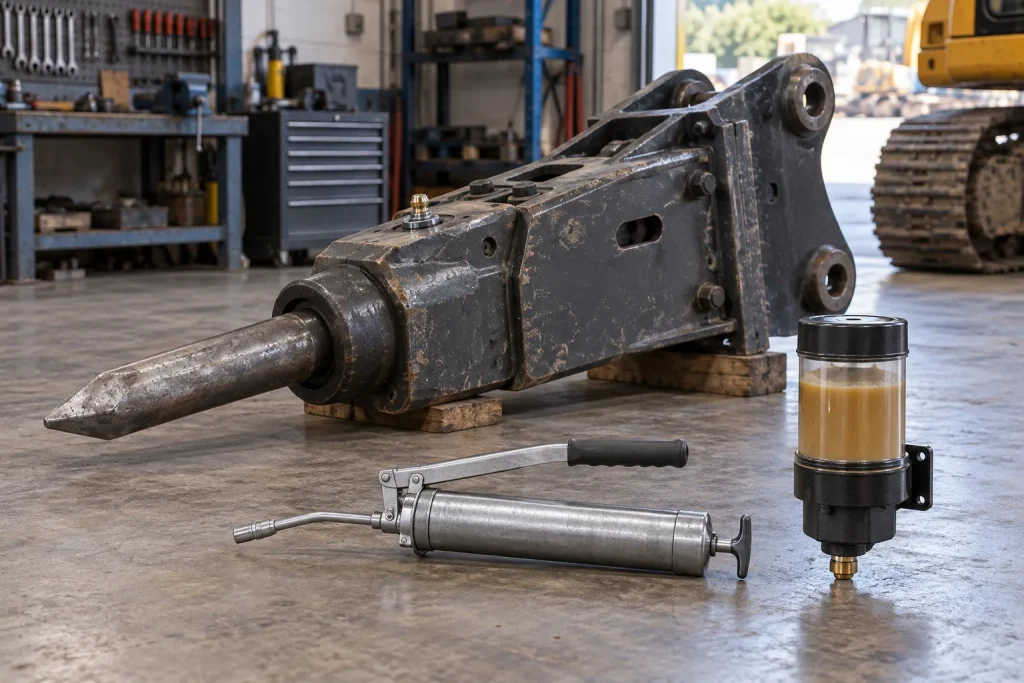
A hydraulic breaker grease system may be manual or automatic, depending on the model and installation. Its purpose is to deliver the approved lubricant to specified wear points. Do not assume a visible reservoir proves that the tool is receiving grease.
Identify the actual arrangement
For a hydraulic breaker grease system, read the attachment manual and locate each lubrication point. Identify the specified lubricant, delivery method, cartridge or reservoir and service interval. Different systems can have different settings and connection routes.
A hydraulic breaker grease system described as automatic still needs inspection. Check that its supply is available, connections are secure and the maker’s function test passes. A blocked line or empty cartridge can leave the contact area unprotected.
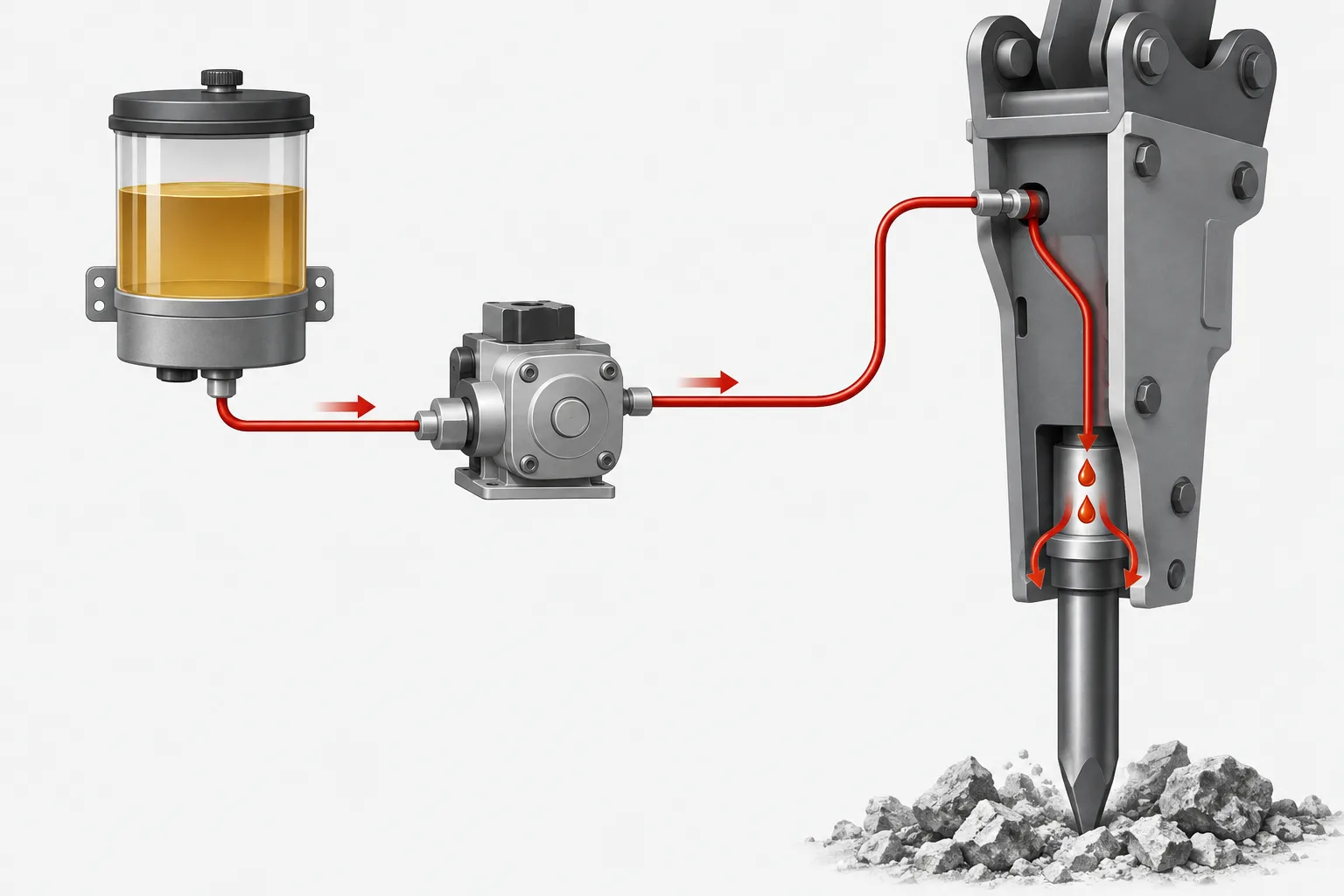
Verify delivery, not just hardware
Before operating a hydraulic breaker grease system, follow the OEM’s commissioning steps. Record the cartridge type, filling date and any fault indicators. Do not change pump output or substitute grease based only on the appearance of another attachment.
When a hydraulic breaker grease system uses hoses, inspect routing for abrasion, pinching and loose fittings within the approved layout. The illustration here is conceptual, not an installation drawing. Only a model-specific diagram can identify the correct ports and path.
A hydraulic breaker grease system can appear connected while delivering too little or too much lubricant. Use the manufacturer’s prescribed verification method and maintenance schedule. If there is no clear instruction, obtain technical support before adjusting the system.

Hydraulic breaker grease system routine checks
A hydraulic breaker grease system log should identify checker, date, model and faults.
Add the hydraulic breaker grease system to the pre-start checklist: approved lubricant present, cartridge secure, lines intact and alarms addressed. During planned stops, inspect the tool and bushings for unusual wear or signs of inadequate lubrication.
If the hydraulic breaker grease system stops working, suspend operation as the manual requires and troubleshoot safely. Do not assume that extra grease later will reverse damage already caused by dry running.
For manual lubrication, the hydraulic breaker grease system may simply be the specified points and a documented operator routine. Never invent a pump or cartridge requirement where the approved model has none.
Read our general greasing guide. Send your model details to LICHI before requesting hydraulic breaker grease system parts; availability and compatibility require confirmation.
References: Epiroc breaker lubrication features; Epiroc chisel paste guidance. These are manufacturer examples, not LICHI system specifications.
Keep Comparing
Compare more breaker models and buyer guides related to this topic.


